
HomePlantBot care guide
Peace Lily Care blueprint and bloom tips
The peace lily ( Spathiphyllum ) has long earned its reputation as one of the most elegant and easy-care indoor plants. Originating from the tropical forests of Central and South America, peace lilies rose to prominence worldwide due to their lush green foliage and signature white spathes that resemble flowers.
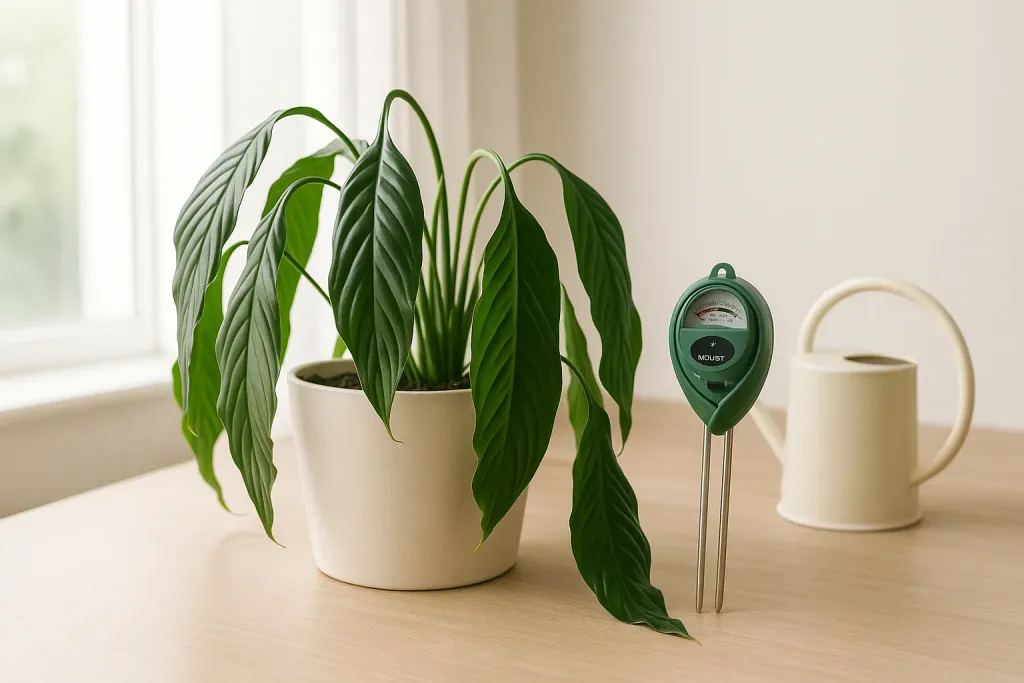
What you’ll learn in this article
- Understand the origins and benefits of peace lilies as houseplants
- Explore popular peace lily varieties and their unique traits
- Learn how to optimize light, watering, and soil conditions
- Manage temperature, humidity, and pests effectively
- Master fertilizing, repotting, pruning, and propagation techniques
- Encourage healthy growth and consistent blooming
Affiliate disclosure: HomePlantBot may earn from qualifying purchases through the Amazon links below, at no extra cost to you.
Introduction to Peace Lilies
Peace lilies are not only attractive but offer real health benefits. They are proven natural air purifiers, low-maintenance, and provide year-round green beauty with occasional blooms. This peace lily care blueprint and bloom tips guide is your all-in-one resource for helping your peace lily flourish—whether you’re just starting or looking to take your plant to the next level.
Important: Peace lilies are toxic to pets if ingested. Learn more about peace lily toxicity and pet safety.
Overview of Peace Lily Varieties
There are several peace lily cultivars, each with its own leaf designs, bloom patterns, and growing habits. Choosing the right one can influence both aesthetic and flowering potential.
| Variety | Leaf Character | Size | Notes |
|---|---|---|---|
| ‘Mauna Loa’ | Large, deep green leaves | 2–3 ft tall | Popular and reliable bloomer indoors |
| ‘Domino’ | Variegated white patterns | 1–2 ft | Visually striking; moderate bloomer |
| ‘Sensation’ | Very large, glossy leaves | Up to 6 ft | Great for statement spaces, dramatic foliage |
Explore our peace lily variety guide to help choose the right option for your indoor environment and bloom preferences.
Light Requirements for Peace Lilies
Peace lilies prefer bright, indirect light. Excessive direct sunlight can scorch leaves, while too little light often results in no flowering and sluggish growth.
Signs of Improper Lighting
- Too much light: Brown patches, curling leaves
- Too little light: No blooms, elongated weak stems
Place your peace lily near an east- or north-facing window, or several feet away from a south-facing one. If good natural light isn’t available, consider a grow light to support its bloom cycles.
Learn more in our guide on light exposure and blooming.
Watering and Soil Blueprint
Correct watering is essential to keep your peace lily hydrated but not waterlogged. The rule of thumb is: keep the soil lightly moist but not soggy. Overwatering is one of the most common issues encountered.
Watering Schedule Based on Environment
| Season | Frequency |
|---|---|
| Spring/Summer | Every 5–7 days |
| Fall/Winter | Every 10–14 days |
Check for drooping as an indicator of dehydration—although it bounces back quickly—and monitor for soft, yellowing leaves as signs of overwatering. Dive deeper into our peace lily drooping diagnosis guide.
Use a well-aerated, quick-draining potting mix. A good mix might include peat moss, perlite, and bark. See our full peace lily soil mix guide including DIY and commercial options.
Temperature and Humidity Needs
Peace lilies thrive in warm and humid conditions similar to their native habitats. Aim to maintain indoor temperatures between 65°F and 80°F, avoiding drafts and sudden cold exposure.
Humidity Boosting Ideas
- Use a humidifier nearby
- Group plants together
- Set potted plant on a humidity tray with water and pebbles
As seasons change, adjust watering and humidity practices for indoor climate shifts such as heating in winter or AC in summer, both of which can dry the air your peace lily loves.
Helpful products for this care problem
Helpful products for careful feeding
If this is the issue you are solving, these tools can make the next step easier. They are optional, but they match the care problem covered in this article.
 Houseplant fertilizerBest used lightly during active growth, not during stress.View on Amazon (paid link) ↗
 Soil moisture meterHelps check whether the root zone is actually ready for water.View on Amazon (paid link) ↗Digital hygrometerHelps track humidity and temperature around sensitive plants.View on Amazon (paid link) ↗
As an Amazon Associate, HomePlantBot may earn from qualifying purchases.
Fertilizing Schedule for Healthy Growth and Blooms
To promote sustained health and flowering, fertilize with a balanced houseplant formula (e.g., 20-20-20).
Feeding Schedule
- Spring/Summer: Once every 4–6 weeks
- Fall/Winter: Rarely or not at all
Watch for fertilizer salts building on soil or leaf tips browning—signs you’re overfeeding. Flush the pot with water and resume fertilizing at half strength once resolved for an effective peace lily care blueprint and bloom boost.
Potting and Repotting Tips
Peace lilies often grow densely packed roots, which signals it’s time to repot. Typically, repot every 1–2 years, preferably in spring.
How to Repot
- Gently remove the plant and loosen compacted roots
- Select a pot 1–2 inches wider with drainage holes
- Use fresh potting mix (see mix guide)
- Plant at the same depth and water thoroughly
If your plant shows wilting or stress after repotting, don’t panic. Consult our article on reviving a severely wilted peace lily.
Common Pests and Diseases
Though hardy, peace lilies can attract pests such as fungus gnats, spider mites, and mealybugs. Fungal or bacterial infections may also occur with excess moisture.
Common Pests
- Fungus gnats: Avoid overwatering, use sticky traps (prevention tips)
- Spider mites: Look for webbing and yellow stippling
- Mealybugs: Cotton-like clumps on leaves and stems
If leaf tips turn brown, it can indicate either low humidity, salt buildup, or water quality. Check out our brown tip diagnosis and solutions article.
Propagation and Pruning Methods
The most effective way to propagate peace lilies is by root division during repotting. Each divided clump should have roots and at least one shoot.
Steps to Propagate by Division
- Remove plant from pot and gently separate root ball into sections
- Pot each section in the appropriate-sized container
- Water and care normally, allowing 2–4 months for regrowth
Learn more in our guide to peace lily propagation.
Pruning Tips
- Remove yellow or old leaves at the base with sterile scissors
- Clip off faded flower stalks to redirect energy
- Trim damaged tips carefully to preserve the leaf
Conclusion: Your Peace Lily Care Blueprint in Action
Caring for a peace lily is rewarding and simple when you follow the fundamentals. With the right balance of light, water, soil, and temperature, along with timely feeding and repotting, your plant will not only survive but thrive—and reward you with elegant blooms throughout the year.
Always watch your plant’s signals and adjust your care accordingly. Explore our collection of additional peace lily care topics for troubleshooting and in-depth help.
Have a blooming success story or need guidance with a finicky plant? Share your peace lily journey or post your questions in the comments below!
Need help choosing the next care step?
If the symptoms in this article match your plant, use Plant Bot or the rescue checklist before buying anything. A quick diagnosis helps you fix the actual cause, not just the most visible symptom.
Quick decision checklist
- Feed lightly during active growth.
- Do not fertilize a stressed or dry plant.
- Flush soil occasionally to prevent salts.
- Use weaker doses for sensitive foliage.