
HomePlantBot care guide
Peace Lily Drooping diagnosis
The peace lily ( Spathiphyllum ) is one of the most beloved houseplants, known for its elegant white blooms and broad green leaves. It’s popular for being low-maintenance while adding a touch of calm and beauty to any indoor space. However, one of the most common concerns among peace lily owners is drooping foliage.
What you’ll learn in this article
- How to diagnose the cause of a drooping peace lily using visual cues and simple tools
- The difference between temporary drooping and chronic stress in peace lilies
- A care checklist for maintaining a healthy peace lily environment
- Step-by-step solutions to fix common causes like overwatering, pests, and low light
- When and how to propagate a peace lily to rejuvenate it
- How to prevent future drooping with consistent care and monitoring
Affiliate disclosure: HomePlantBot may earn from qualifying purchases through the Amazon links below, at no extra cost to you.
Introduction
Drooping is the plant’s way of signaling distress. Though dramatic at times, it is often a reversible symptom if addressed promptly and correctly. Whether it’s caused by inconsistent watering, pest attacks, or lighting issues, most cases of peace lily drooping can be resolved with a clear diagnosis and tailored care tactics.
In this comprehensive guide, you’ll learn how to identify why your peace lily is drooping, how to fix the underlying issue, and how to prevent it from happening again. Read on to revitalize your plant and restore it to lush, upright health.
Overview: Understanding Drooping
What Drooping Looks Like
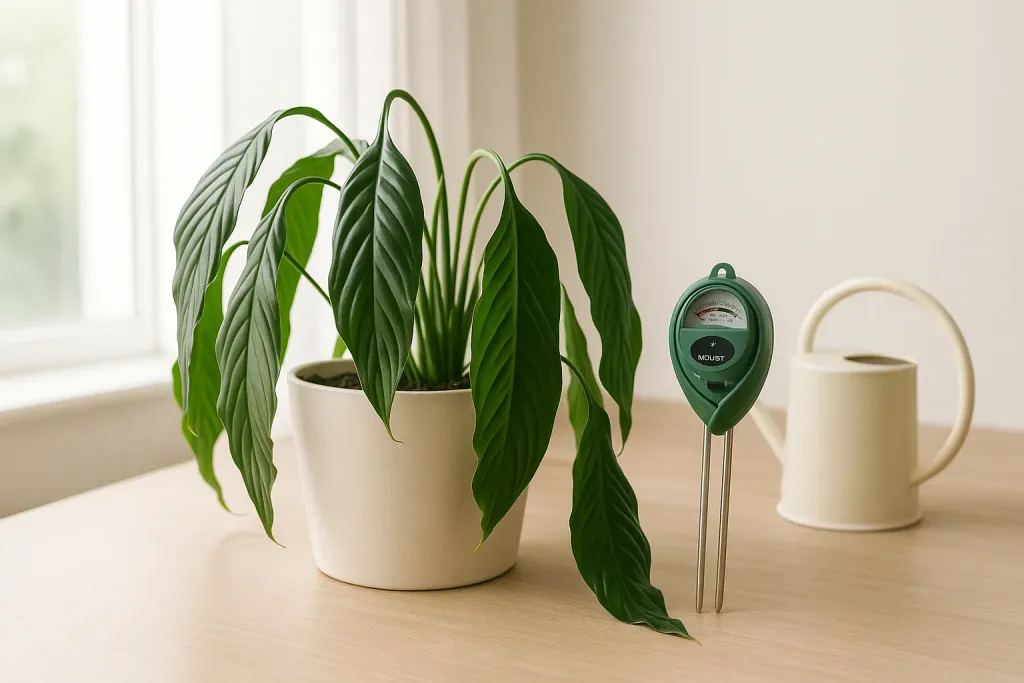
Drooping in peace lilies typically presents as sagging leaves and stems, loss of turgidity (firmness), and sometimes a downward curl. The plant may appear ‘sad’ or wilted, even when otherwise healthy-looking.
Temporary vs. Chronic Drooping
- Temporary drooping: Usually occurs if the plant is thirsty, and it perks up within hours after watering.
- Chronic drooping: Involves persistent wilting, often accompanied by yellowing leaves, root problems, or pest activity.
Stress and Plant Physiology
Peace lilies respond to stress by conserving water and energy. This leads to wilting as a survival mechanism. Understanding this process is crucial in addressing the underlying cause effectively.
Basic Diagnostic Tools
- Finger test: Insert your finger 1-2 inches into the soil to check moisture.
- Light meter (optional): Gauges how much light your plant receives daily.
- Magnifying glass: Helpful for detecting small pests like spider mites.
Care Requirements Recap (Baseline Checklist for Healthy Plants)
| Care Factor | Optimal Conditions | Signs of Imbalance |
|---|---|---|
| Watering | Every 5–7 days or when top 1 inch of soil is dry | Underwatering: drooping leaves; Overwatering: soggy soil, yellow leaves |
| Light | Bright, indirect sunlight | Too little: leggy or pale growth; Too much: scorched or curled leaves |
| Humidity | Above 50% | Dry air causes brown tips and drooping |
| Soil & Pot | Well-draining potting mix in container with drainage holes | Waterlogged roots, mold, or root rot if drainage is poor |
| Fertilizer | Balanced, monthly in spring/summer | Stunted growth or pale foliage due to deficiency |
| Temperature | 65-80°F (18–27°C), away from drafts or vents | Sudden drops cause wilted or black-edged leaves |
For a comprehensive care routine, check out our Peace Lily Care Blueprint and Bloom Tips.
Helpful products for this care problem
Helpful products for this plant care problem
If this is the issue you are solving, these tools can make the next step easier. They are optional, but they match the care problem covered in this article.
 Soil moisture meterHelps check whether the root zone is actually ready for water.View on Amazon (paid link) ↗
 Digital hygrometerHelps track humidity and temperature around sensitive plants.View on Amazon (paid link) ↗Clip-on grow lightUseful for dim rooms, winter care, and plants stretching toward light.View on Amazon (paid link) ↗
As an Amazon Associate, HomePlantBot may earn from qualifying purchases.
Common Causes of Drooping and How to Diagnose Each
Underwatering
- Symptoms: Leaves become limp, slightly crispy, with dry soil
- Fix: Deeply water the plant until moisture drains from the bottom. Repeat when the top soil dries out again
Overwatering and Root Rot
- Symptoms: Persistent droopiness, yellow leaves, mushy stems, musty smell
- Fix: Remove plant from pot, rinse roots, snip off mushy black roots. Repot in fresh, dry soil with good drainage
Light Stress
- Too much light: Yellowed or sun-scorched leaves
- Too little light: Pale, elongated leaves
- Fix: Move to a spot with bright but indirect light
Temperature Extremes
- Symptoms: Drooping leaves with curled or blackened edges
- Fix: Keep plant away from drafts, heating vents, or windows during cold months
Low Humidity
- Check: Use a hygrometer or observe crispy tips
- Fix: Group with other plants, place on humidity tray, or use a humidifier
Pests
- Common pests: Spider mites, mealybugs
- Symptoms: Sticky residue, webbing, tiny moving dots
- Fix: Wipe leaves with neem oil or insecticidal soap weekly until pests are gone
Pot-Bound Roots
- Symptoms: Roots growing out of drainage holes, soil dries quickly after watering
- Fix: Repot into a container 2 inches wider using peace lily-appropriate soil
Nutrient Deficiency
- Signs: Pale or yellowing leaves, slow growth
- Fix: Apply a balanced liquid fertilizer monthly during growing seasons
Propagation Tips: When a Droopy Lily Needs a Fresh Start
When to Propagate
If your peace lily is consistently drooping despite correct care—or if it’s grown too large for its pot—it may benefit from division and propagation.
How to Divide a Peace Lily
- Carefully remove the plant from its pot
- Separate natural clumps, ensuring each has roots and a few leaves
- Use a sterilized blade if needed to cut through tangled roots
Repotting & Aftercare
- Place each division in a small container with fresh potting mix
- Water thoroughly and keep in indirect light for 1–2 weeks
- Avoid fertilizing until the plant resumes active growth
Conclusion
Drooping isn’t a death sentence—it’s your peace lily’s way of asking for help. Most of the time, a few tweaks in watering, lighting, or environment are all it takes to bring your plant back to its full, graceful posture.
By observing changes closely and responding appropriately, you’ll quickly become in tune with your peace lily’s needs. Keep a plant care journal to track watering, light exposure, and any issues that arise. Weekly monitoring can turn crisis into control.
Want next-level care guidance? Explore our Peace Lily Care Blueprint and Bloom Tips to ensure your plant not only survives but thrives.
You’ve got this—your peace lily will be perking up in no time!
Need the fastest next step?
The Drooping Houseplant Solution Kit helps you tell the difference between thirst, soggy roots, and stress before you guess.
Need help choosing the next care step?
If the symptoms in this article match your plant, use Plant Bot or the rescue checklist before buying anything. A quick diagnosis helps you fix the actual cause, not just the most visible symptom.
Quick decision checklist
- Check the growing conditions before changing everything.
- Adjust one care factor at a time.
- Use symptoms to guide the next step.
- Give the plant time to respond after corrections.