
HomePlantBot care guide
Peace Lily Light Requirements & Best Grow Light Setup
Learn the light conditions peace lilies need for healthy leaves and blooms, including window direction, grow-light timing, distance, and warning signs.
How much light does a peace lily need to bloom?
Give a peace lily bright, filtered light; add a grow light if the available daylight is weak. Good light supports flowering, but it does not guarantee blooms on a schedule. Plant maturity, cultivar, temperature, and overall care also matter.
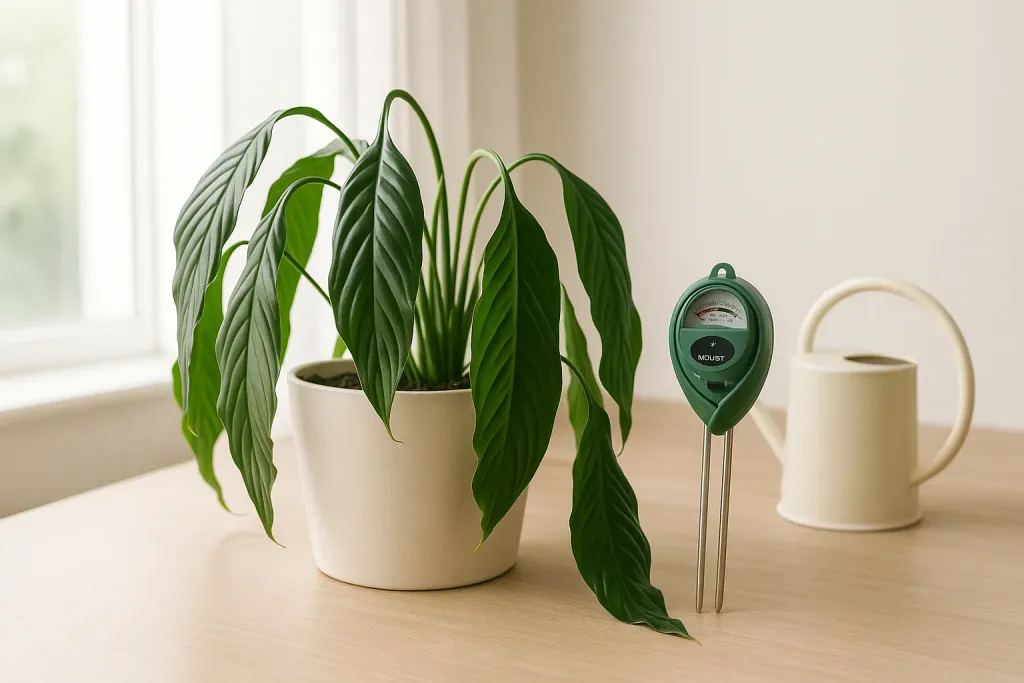
Acclimate gradually and watch for bleaching on the side facing the light. If the plant is drooping or yellowing, use the symptom checks before assuming it needs a brighter lamp. Our light measurements section explains how to assess the setup.
What you’ll learn in this article
- Understand how different light intensities affect peace lily blooming
- Learn the difference between PPFD and DLI and how they guide plant care
- Discover seasonal strategies to maintain optimal lighting indoors
- Identify signs of both insufficient and excessive light exposure
- Explore affordable supplemental lighting solutions for home or office
Affiliate disclosure: HomePlantBot may earn from qualifying purchases through the Amazon links below, at no extra cost to you.
Introduction to Light Requirements
Peace lilies (Spathiphyllum) are beloved houseplants known for their glossy green leaves and elegant white flowers. Beyond their aesthetic appeal, they are relatively low-maintenance, making them popular for homes and offices alike.
While peace lilies can tolerate a range of conditions, providing the right light is essential for encouraging healthy, consistent blooming. Many growers are puzzled when their lush peace lily refuses to flower—that mystery often lies in improper light exposure.
This guide focuses specifically on optimizing lighting to support flower production. For a complete overview of care including watering, feeding, and repotting, visit our full guide: Peace Lily Care Blueprint and Bloom Tips.
Understanding Light Intensity (PPFD, DLI)
What is PPFD?
Photosynthetic Photon Flux Density (PPFD) measures the amount of light (specifically light in the photosynthetically active radiation range) a plant receives every second. It’s measured in micromoles per square meter per second (μmol/m²/s). This figure helps gauge how strong the light is at any given moment.
What is DLI?
Daily Light Integral (DLI) measures the total amount of light a plant receives over an entire day. It’s expressed in moles per square meter per day (mol/m²/day). DLI gives insight into whether cumulative daily light exposure is sufficient for blooming.
What Do Peace Lilies Require?
The following ranges are practical trial values, not established flowering thresholds for every cultivar. Duration also matters:
- Moderate PPFD: Around 100–250 μmol/m²/s
- DLI: Approximately 4–6 mol/m²/day
Lower light levels may suffice for keeping the plant alive, but flowering is unlikely without adequate light accumulation over time.
Optimal Light Levels for Growth
Bright, indirect light is the sweet spot for peace lilies to thrive and bloom. They naturally grow under the canopies of tropical forests, so they’re accustomed to dappled sunlight—not harsh rays.
Best Window Placements
| Window Direction | Light Characteristics | Suitability |
|---|---|---|
| East-facing | Mild morning sun, soft indirect light | Ideal |
| North-facing | Low light | Acceptable for foliage only |
| South-facing | Strong light, especially midday | Use sheer curtains for filtering |
| West-facing | Hot afternoon sun | Conditionally suitable with diffusion |
Daily Light Routine Example
To encourage blooming, aim to provide your peace lily with:
- 10–12 hours of consistent, indirect light per day
- Filtered or diffused light through curtains or blinds
- Occasional rotation to even out light exposure on all sides
Busting the Low-Light Myth
While peace lilies can survive in low light, they are unlikely to bloom in such conditions. A location that allows indirect sunlight for several hours a day is a much better choice than a dark corner.
Amazon affiliate recommendations · As an Amazon Associate I earn from qualifying purchases. These are optional editorial picks, not hands-on tests. If a healthy peace lily sits in weak daylight, try brighter filtered window light first. Supplemental light can help a dim location, but no light guarantees flowers. Check roots and watering before treating drooping as a lighting problem. Use it carefully: Keep a regular dark period, acclimate gradually, and watch for bleaching or heat. If daylight is already good, review plant maturity, season, and care rather than adding a stronger lamp solely to force blooms.When a small grow light makes sense for a peace lily

Adjusting Light with Seasons
Daylight hours and sun intensity naturally fluctuate with the seasons, which impacts your plant’s access to consistent light.
Summer Strategy
- Windows receive more hours of stronger light
- Use sheer or white curtains to diffuse midday sun and prevent leaf scorch
- Monitor for signs of overheating: dry soil, crispy tips
Winter Strategy
- Daylight hours shorten and intensity decreases
- Move peace lilies closer to windows to maximize light access
- Consider supplemental grow lights if blooming is a goal during winter months
Monthly Light Tracking
Using a free smartphone app or an affordable light meter, you can track natural light levels month to month to better manage your care routine. This is especially useful in less predictable climates or rooms with limited direct sun.
Signs of Insufficient or Excessive Light
Not sure if it is really a light problem?
Peace lilies often stack symptoms. Light can be part of the story, but yellowing, crispy tips, drooping, and dry air each need a slightly different rescue path.
- Yellow leaves with fading color or soft decline? Start with the Yellow Leaves Solution Kit.
- Brown edges and scorched-looking tips? Use the Brown Tips & Crispy Leaves Solution Kit.
- Leaves stay limp or curl in dry rooms? Open the Low Humidity Solution Kit.
Match the care step to the symptom you can actually see.
Low Light Symptoms
- No blooms despite otherwise good care
- Large, dark green leaves (compensating for low light by increasing chlorophyll)
- Leggy growth or leaves leaning toward windows
Excess Light Symptoms
- Faded or scorched leaves
- Brown-tipped leaves and dry, compacted soil
- Reduced flowering from light stress
Diagnosing and Correcting Light Issues
If you suspect lighting problems are at play:
- Relocate your plant to an east- or north-facing window
- Adjust blinds or curtains to modify sun strength
- Track light exposure using a digital meter or app
Supplemental Lighting Options
Sometimes, natural light just isn’t enough. In spaces distant from windows—offices, basements, or winter settings—supplemental grow lights can make all the difference.
When to Use Grow Lights
- During winter months with shorter daylight
- In rooms with poor natural light
- If you’re actively trying to boost blooming frequency
Choosing the Right Light
| Grow Light Type | Pros | Cons |
|---|---|---|
| LED | Energy-efficient, cool-running, long lifespan | Higher upfront cost |
| Fluorescent (CFL/T5) | Affordable, widely available | Shorter lifespan, may run warm |
Light Setup Tips
- Keep the light 12–18 inches above the plant
- Provide 10–12 hours of light per day using a timer
- Position lights to mimic natural light coming from above
Budget-Friendly Suggestions
You don’t need a full-fledged greenhouse setup. Simple clip-on LED grow lights with full-spectrum settings can efficiently support peace lily blooms in low-light homes or offices.
Conclusion
With the right lighting, peace lilies can go beyond surviving—they can truly thrive and reward you with their graceful blooms. Understanding light intensity, tracking seasonal shifts, and adjusting accordingly are crucial steps for encouraging flowering.
Remember, plants are dynamic. Continual observation and small lighting tweaks can significantly influence your peace lily’s growth and beauty.
For plant lovers seeking a complete guide beyond lighting, don’t miss our full article: Peace Lily Care Blueprint and Bloom Tips.
Need help choosing the next care step?
If the symptoms in this article match your plant, use Plant Bot or the rescue checklist before buying anything. A quick diagnosis helps you fix the actual cause, not just the most visible symptom.
Quick decision checklist
- Increase light gradually to avoid scorch.
- Rotate the plant for even growth.
- Water less in lower light.
- Watch color and leaf posture for feedback.
Sources and further reading
Updated September 30, 2026. Care guidance describes starting points and observable clues; individual plants and growing conditions vary.