
HomePlantBot care guide
Peace Lily: General Toxicity Information and Source Limits
Spathiphyllum calcium-oxalate hazards, the distinction from true lilies, and separate professional resources. No exposure diagnosis or treatment.
General information only
General plant-safety information, not medical or veterinary advice. HomePlantBot cannot assess an exposure, diagnose poisoning or recommend treatment for a person, child or animal. Descriptions of possible effects do not predict an individual outcome.
Professional resources
People in the United States: Poison Help, 1-800-222-1222. Emergencies: 911.
Pets: A veterinarian or emergency veterinarian; in the United States, ASPCA Poison Control, 888-426-4435. A consultation fee may apply.
Elsewhere: The appropriate local poison, veterinary or emergency service.
General plant hazard information
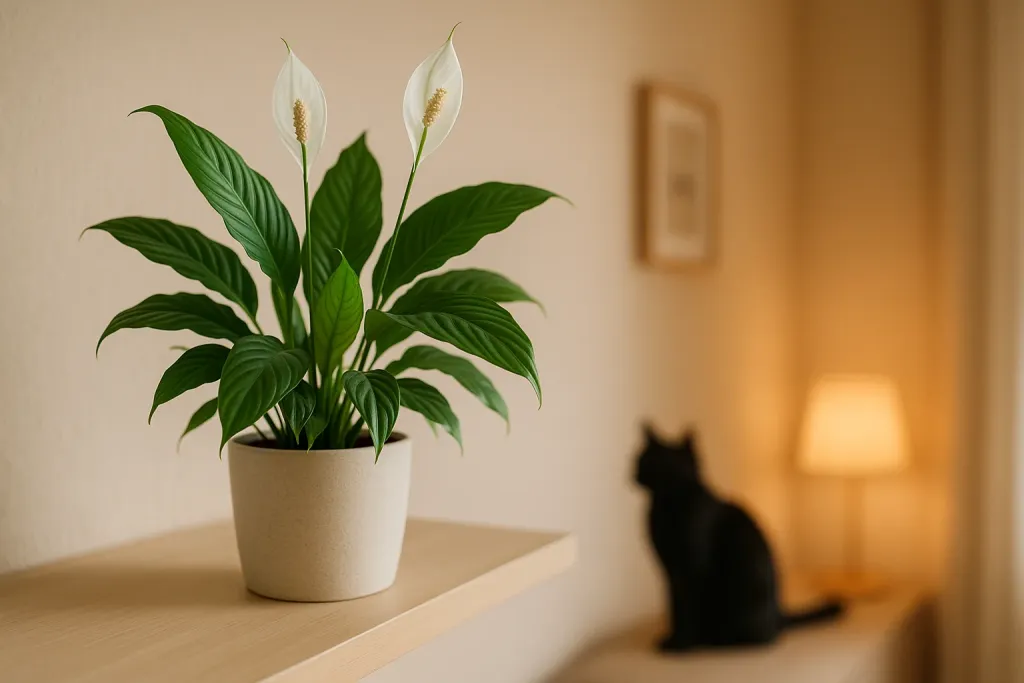
Peace lily is the common name for Spathiphyllum. ASPCA lists it as toxic to cats and dogs and identifies insoluble calcium oxalates. The source describes oral irritation as a general effect of this plant hazard.
| Plant identity | Source audience | General hazard information |
|---|---|---|
| Peace lily Spathiphyllum | Cats and dogs | ASPCA lists toxicity and insoluble calcium oxalates; oral irritation is a reported general effect. Source entry |
| True lilies and daylilies Lilium and Hemerocallis | Cats | FDA describes a kidney-injury hazard. These are different plants from peace lilies. Source entry |
Peace lily and true lily are different plants
The FDA distinguishes true lilies and daylilies from other plants with lily in their common name. Lilium and Hemerocallis present a kidney-injury hazard to cats. That does not make a Spathiphyllum exposure harmless; it is a different plant hazard.
This comparison explains plant identity and general source-backed effects. It is not a symptom checklist, a diagnosis or a way to estimate the risk of an actual ingestion.
Sources and audience limits
- Poison Control: human plant hazards and classifications
- ASPCA: animal plant database
- Peace lily: cited source entry
- True lilies and daylilies: cited source entry
These references support the general information identified above. They do not assess an actual exposure or establish a treatment, dose, waiting period or prognosis.