
HomePlantBot care guide
Peace Lily Revival after severe wilt
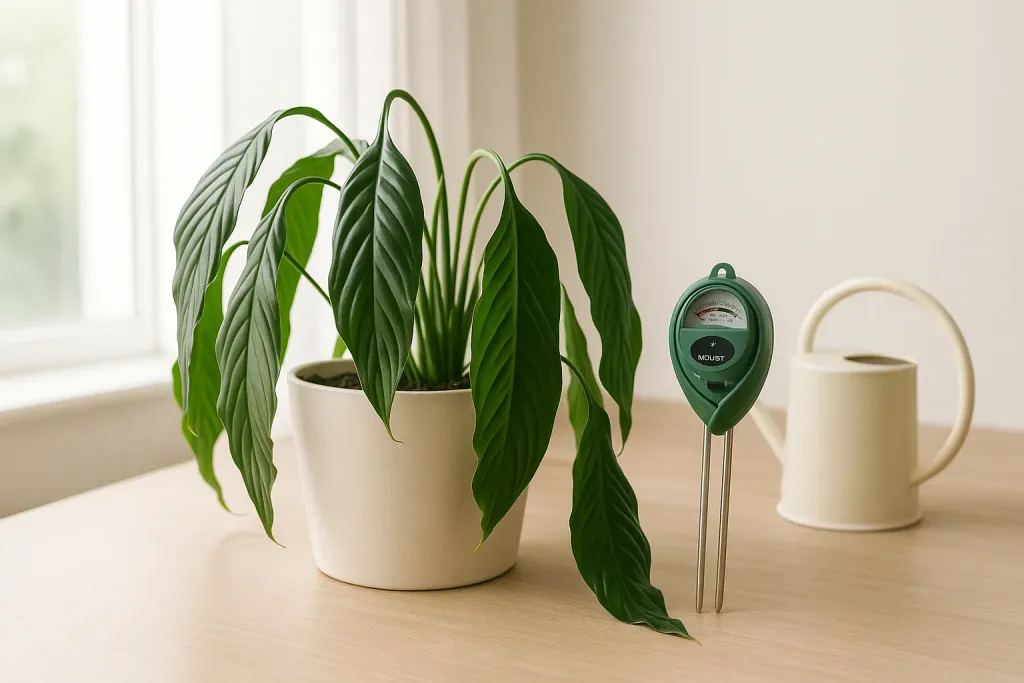
Ever walked into your home only to find your once-glorious peace lily slumped in a sad heap of brown and wilted leaves? You’re not alone. Many plant lovers experience the heartbreak of a severely wilted peace lily—but all hope is not lost.
What you’ll learn in this article
- The main causes behind severe wilting in peace lilies
- A step-by-step guide to reviving a wilted peace lily
- Environmental tips for a successful recovery
- Common pitfalls during the revival process
- How to propagate if revival fails
Affiliate disclosure: HomePlantBot may earn from qualifying purchases through the Amazon links below, at no extra cost to you.
Introduction
A wilting peace lily doesn’t mean it’s doomed—it’s sending a message. With the right care, this resilient plant can bounce back and regain its lush, green beauty.
In this comprehensive guide, we’ll explore the most common reasons for severe wilting, give you a step-by-step peace lily revival guide, and share maintenance practices to ensure long-term health.
Overview: Understanding Peace Lily Wilt
What Makes Peace Lilies Unique
Peace lilies (Spathiphyllum) are tropical understory plants that thrive in warm, humid environments with indirect light. Native to Central and South America, they’re known for their glossy leaves and white, sail-like flowers.
Signs of Severe Wilt
- Limp, drooping leaves
- Yellowing or browning leaf edges
- Dry, crusty soil or soggy, foul-smelling soil
- Roots that are mushy or brittle
Common Causes of Peace Lily Wilt
- Underwatering: Dry soil starves the plant of moisture needed for turgor pressure.
- Overwatering: Leads to root rot, suffocating the root system.
- Sudden temperature changes: Chilly drafts or sharp heat can stress the plant.
- Excessive sunlight: Direct sun burns leaves and dehydrates the plant.
- Poor drainage: Soil that holds water invites rot.
Care Requirements for Peace Lily Revival
Step-by-Step Revival Guide
- Assess the damage: Inspect leaves, soil moisture, and roots. Severely wilted leaves and mushy roots are red flags.
- Remove dead foliage: Use sterilized scissors to snip away yellow, brown, or mushy leaves at the base.
- Inspect roots: Take the plant gently out of its pot. If roots are blackened, soft, or smell foul, root rot may be present.
- Repot if necessary: Use a clean pot with drainage holes and fresh, well-aerated potting mix. A mix with perlite, coco coir, and peat moss works well.
- Rehydrate slowly: Water with room-temperature distilled water. Avoid flooding the roots all at once—moisten gradually.
- Stabilize the environment: Place the plant in a spot with bright, indirect sunlight and consistent humidity.
- Monitor progress: Over 2–4 weeks, observe for signs of new leaf growth or firmness in surviving stems.
Ideal Environmental Conditions
| Condition | Optimal Range |
|---|---|
| Temperature | 65°F–80°F (18°C–27°C) |
| Light | Bright, indirect sunlight |
| Humidity | 40%–60%, ideally higher |
| Watering Frequency | When top inch of soil feels dry |
To maintain high humidity, consider using a humidifier or a pebble tray. Also, avoid placing your peace lily near air conditioning vents or radiators where moisture can rapidly escape.
For more long-term guidance on light, soil, and nutritional needs, visit our Peace Lily Care Blueprint and Bloom Tips.
Helpful products for this care problem
Helpful products for this plant care problem
If this is the issue you are solving, these tools can make the next step easier. They are optional, but they match the care problem covered in this article.
 Soil moisture meterHelps check whether the root zone is actually ready for water.View on Amazon (paid link) ↗
 Digital hygrometerHelps track humidity and temperature around sensitive plants.View on Amazon (paid link) ↗Clip-on grow lightUseful for dim rooms, winter care, and plants stretching toward light.View on Amazon (paid link) ↗
As an Amazon Associate, HomePlantBot may earn from qualifying purchases.
Common Issues That Hinder Revival
Root Rot
If you discover mushy, blackened, or smelly roots, your plant’s root system may be severely compromised. Cut away soft roots with sterilized shears, then replant in fresh, well-draining mix.
Irreversible Damage
If the plant’s crown (where stems meet the base) is mushy, slimy, or collapsing inwards, the plant may be beyond revival. In such cases, propagation may be your only option.
Pest Infestations
Weakened plants are magnets for pests like mealybugs and spider mites. Use a magnifying glass to inspect leaf joints and undersides. Treat with insecticidal soap or neem oil if needed.
Recovery Shock
Don’t be alarmed if your peace lily shows no signs of progress in the first week. Brown spots or continued drooping can just be signs of adjustment.
Propagation: If Revival Fails
If your peace lily’s main crown is too far gone, you may still be able to salvage healthy offshoots from the root system to create new plants.
How to Propagate a Peace Lily
- Remove from pot: Gently shake off excess soil.
- Look for offshoots: Identify clumps with their own roots and a small crown.
- Divide carefully: Use clean garden shears or your hands to separate them.
- Repot: Plant each new division in its own pot filled with moist, peace-lily-friendly soil.
- Humidity support: Cover each pot with a clear plastic bag or humidity dome for the first 7–10 days.
Aftercare for Propagated Plants
- Keep them in a warm, bright spot out of direct sun.
- Mist lightly every 2–3 days.
- Watch for new leaf growth within 2–4 weeks.
Conclusion
Reviving a peace lily that’s suffered a severe wilt isn’t always quick, but with attention and consistency, many bounce back beautifully. The secret lies in reacting promptly to the warning signs, improving environmental conditions, and being patient with the healing process.
Even if the mother plant can’t be revived, propagation offers a second chance through healthy offshoots.
Ready to take your peace lily care to the next level? Visit our Peace Lily Care Blueprint and Bloom Tips for deeper guidance on creating a thriving environment year-round.
Have a revival story to share or questions about your plant’s progress? Drop a note in the comments—we’d love to help!
Need help choosing the next care step?
If the symptoms in this article match your plant, use Plant Bot or the rescue checklist before buying anything. A quick diagnosis helps you fix the actual cause, not just the most visible symptom.
Quick decision checklist
- Check the growing conditions before changing everything.
- Adjust one care factor at a time.
- Use symptoms to guide the next step.
- Give the plant time to respond after corrections.