
HomePlantBot care guide
Travel‑Proof Plant Care: The Complete Guide
Heading out on vacation comes with plenty of excitement—but if you’re a plant parent, you know the pang of wondering how your leafy companions will fare while you’re gone. Whether you have a few succulents or a thriving indoor jungle, keeping your plants alive while you travel is entirely possible with the right approach.
What you’ll learn in this article
- How to prepare your houseplants for a vacation
- Assessing plant types and watering frequencies
- Low-tech and high-tech watering solutions
- Smart ways to manage light and humidity
- Choosing between a plant sitter or automation
- How to care for your plants when you return home
Affiliate disclosure: HomePlantBot may earn from qualifying purchases through the Amazon links below, at no extra cost to you.
Introduction
This guide shows you how to create a travel-proof care plan tailored to your plants’ unique needs. You’ll learn how to water smart, manage humidity and light, and choose between a plant sitter or automated systems—all so you can travel stress-free, knowing your plants are thriving back home.
Why Planning Ahead Is Essential for Leaving Plants Unattended
Just like packing your suitcase early helps you avoid last-minute stress, preparing your plants days in advance sets them up for a healthy return. Planning ahead reduces the risks of underwatering, root rot, or sun damage.
Surprisingly common oversights—like accidentally closing curtains that block vital light or not accounting for temperature swings—can weaken or even kill your plants. Take the time to inspect environmental factors, and tackle any changes ahead of time.
For a complete checklist, see our Vacation Prep: Watering, Lighting & Humidity Plans.
Assessing Individual Plant Needs and Pot Sizes Before a Trip
Plants aren’t one-size-fits-all. Some, like succulents and cacti, thrive on neglect. Others—like ferns and calatheas—need consistent moisture and humidity. Understanding your plants’ preferences helps you choose the right solution.
Pot size plays a major role too. Smaller pots dry out faster than larger ones, and that can make all the difference during a week-long trip. Shallow pots with poor drainage also run the risk of smelly, soggy soil if overwatered.
Mapping Your Plants’ Watering Needs
| Plant | Watering Frequency | Drought Tolerance |
|---|---|---|
| Pothos | Every 5–7 days | Moderate |
| Succulent | Every 10–14 days | High |
| Fiddle Leaf Fig | Every 7 days | Low–Moderate |
| Fern | Every 2–3 days | Low |
Consider labeling plants or grouping them by their water needs to streamline care before your trip.
Selecting Watering Strategies: Wicks, Spikes, Globes, or Automated Pumps
Not all watering methods are equal—some are best for specific plants, pot sizes, or trip lengths. Here are popular options to keep your plants hydrated:
Passive Watering Methods
- Wick systems: Use a cotton cord or nylon rope to draw water from a nearby reservoir to the soil. Ideal for small to medium pots with thirsty plants. Learn how to build one in our guide to Wick Watering DIY Systems.
- Watering spikes/globes: These insert into the soil and slowly release water. Best for short trips or moderate drinkers, but may not work well in dry soil or small pots.
Automated Systems
For longer absences or tech-savvy travelers, automated pumps and timers provide precision and peace of mind.
| System Type | Pros | Cons | Setup Time |
|---|---|---|---|
| Automated Pump + Timer | Reliable, customizable | Needs electrical outlet, upfront programming | 30–60 min |
| DIY Gravity Drip | Simple and low-tech | Less accurate, trial-and-error | 15–30 min |
Managing Light Exposure with Curtains, Timers, or Smart Lighting
Just like water, your plants need consistent light while you’re gone. Too little, and they get leggy or drop leaves. Too much, and they risk sunburn—especially behind closed windows where heat builds up.
- Use sheer or partially drawn curtains: East- or west-facing windows can provide filtered light without intensity.
- Set grow lights on timers: If daylight is limited, smart plugs or old-school socket timers can simulate reliable daylight. For more, check out our full lighting automation guide.
- Reposition sensitive plants: Move delicate greenery away from bright south-facing windows to avoid scorching.
Helpful products for this care problem
Helpful products for this plant care problem
If this is the issue you are solving, these tools can make the next step easier. They are optional, but they match the care problem covered in this article.
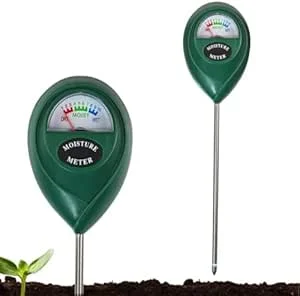 Soil moisture meterHelps check whether the root zone is actually ready for water.View on Amazon (paid link) ↗
 Digital hygrometerHelps track humidity and temperature around sensitive plants.View on Amazon (paid link) ↗Clip-on grow lightUseful for dim rooms, winter care, and plants stretching toward light.View on Amazon (paid link) ↗
As an Amazon Associate, HomePlantBot may earn from qualifying purchases.
Keeping Humidity Stable Through Grouping or Trays
Humidity is especially crucial for tropical plants like calatheas, ferns, and orchids. They can suffer leaf curl or crispy tips in low-moisture air while you’re away.
Humidity Boosting Ideas
- Group plants: Bunching plants together raises local humidity through collective moisture release.
- Use pebble trays: Place pots on trays filled with water and stones—just ensure pots aren’t submerged.
- Avoid vents and drafty windows: Relocate plants away from AC blowers or cold drafts.
- Use bathrooms: Many plants thrive in bathrooms with natural light due to higher humidity.
Deciding Between a Plant Sitter and Fully Automated Setups
Should you enlist a human helper—or trust technology? That depends on how long you’ll be away and how complex your plant collection is.
| Option | Pros | Cons |
|---|---|---|
| Plant Sitter | Flexible, can monitor all needs | Requires clear instructions and trust |
| Fully Automated | Hands-off, reliable if tested | Upfront cost, technical setup |
| Hybrid Approach | Combine automation for watering + sitter for TLC | Still requires coordination |
If choosing a sitter, download our One-Page Plant Care Sheet for Sitters to keep things simple.
Adjusting the Watering Schedule Before Departure to Reduce Risk
The week before departure is your dry run—literally. Use this time to test your watering setup and fine-tune your schedule.
- Ease in gradually: Begin mimicking the vacation watering cadence 5–7 days ahead of time.
- Don’t overwater the night before: Excess water can cause root rot—especially in low-light corners.
- Test systems: Run any wick or pump setups for a day before leaving to ensure consistent flow.
Caring for Plants After Your Return with Rehydration and Inspection
Coming home to crispy leaves or soggy soil? Don’t panic. Post-trip plant care is just as important as the prep.
- Check moisture levels: Use your finger or a moisture meter to gauge dryness before watering.
- Trim damaged leaves: Remove sunburned or wilted foliage with clean scissors to encourage new growth.
- Ease back into routine: Resume regular watering schedules gradually over the next few days.
Need help diagnosing plant issues post-trip? Read our full guide on Rehydration and Sunburn Recovery.
Conclusion: Keeping Plants Healthy During Vacations
With a little planning and the right tools, travel-proofing your plant care can be a smooth process. You’ve learned how to:
- Plan ahead and map plant needs
- Select passive or automated watering options
- Adjust light and humidity while you’re away
- Decide between human care and high-tech systems
- Restore plant health when you’re back home
A thriving plant collection doesn’t have to be a source of stress when you travel. With preparation, your plants can flourish in your absence—and greet you with green joy on your return.
Looking for more? Browse our complete collection of plant care travel resources to make your next getaway a guilt-free success.
Need help choosing the next care step?
If the symptoms in this article match your plant, use Plant Bot or the rescue checklist before buying anything. A quick diagnosis helps you fix the actual cause, not just the most visible symptom.
Quick decision checklist
- Check the growing conditions before changing everything.
- Adjust one care factor at a time.
- Use symptoms to guide the next step.
- Give the plant time to respond after corrections.