
HomePlantBot care guide
Snake Plant Propagation techniques
Choose a rooted rhizome division or correctly oriented leaf section.
Use snake-plant material, not a vine-cutting recipe
Choose a rooted rhizome division or correctly oriented leaf section. A snake-plant leaf is not a vine with a sequence of stem nodes. The supported beginner methods here are division and leaf-section cuttings; the generic air-layering and wet-stick instructions below have been withdrawn.
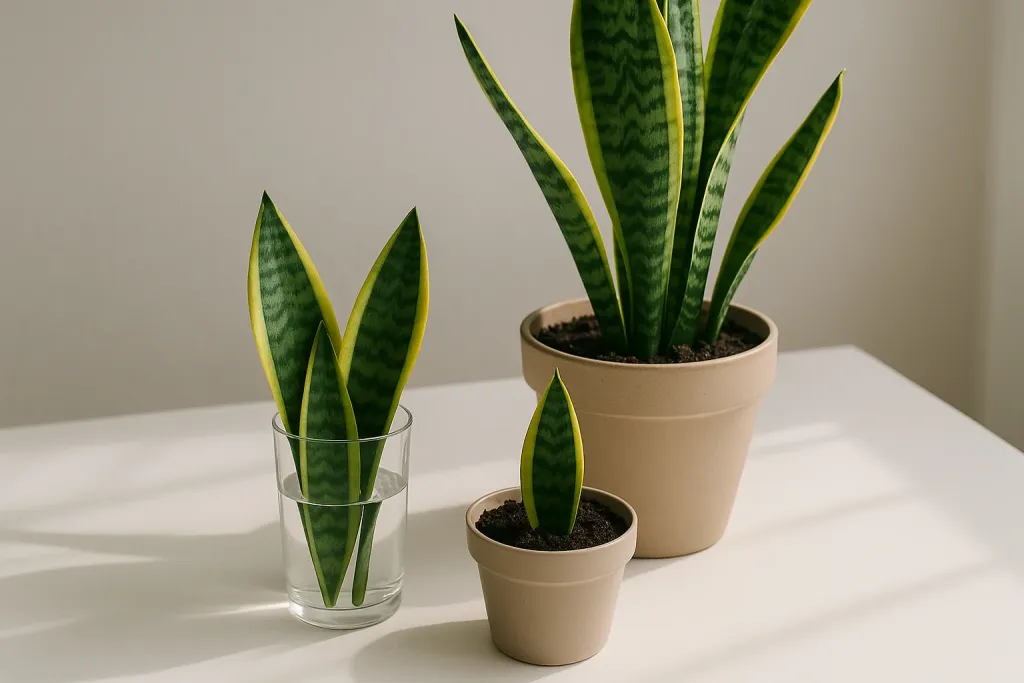
What you’ll learn in this article
- The best seasons and timing for propagating a snake plant
- Step-by-step instructions for water, soil, and advanced propagation methods
- How to diagnose common propagation issues
- Tips for transplanting and caring for new snake plant cuttings
Affiliate disclosure: HomePlantBot may earn from qualifying purchases through the Amazon links below, at no extra cost to you.
Introduction to Propagation
The snake plant (Sansevieria), also known as mother-in-law’s tongue, is a hardy and attractive houseplant known for its architectural, upright leaves and foliage and architectural interest; a reasonable number of pots is not an established way to remove significant pollutants from ordinary rooms. As a favorite among beginner and seasoned plant lovers alike, the snake plant is also one of the easiest plants to propagate.
Propagation matters for several reasons: it helps you create new plants from an existing one, revives struggling specimens, and offers a sustainable way to expand your indoor garden without buying more plants.
Best time to propagate: Spring and summer, when the plant’s growth is most active. These seasons give your cuttings the best chance at rooting successfully.
Not sure if your plant is ready? Look for pups growing from the base or leaves that are mature and healthy — these are ideal candidates for propagation.
Before you begin, check out our comprehensive Snake Plant Care Playbook to ensure your mother plant is thriving.
Stem Cuttings in Water
Materials Needed
- Healthy snake plant leaves
- Sharp sterilized shears
- Clean glass jar
- Filtered or distilled water
How to Propagate
- Cut a mature leaf near the base using clean shears.
- Slice the leaf into 2–3 inch sections.
- Mark the base of each segment to ensure correct orientation — the end that was closer to the soil should go into the water.
- Let the cuttings sit in open air for a day before placing them in water to reduce rot risk.
- Place the segments in a jar with the correct end submerged in water.
- Change water every 5–7 days to keep it fresh.
Monitoring Growth
You’ll typically see small white roots forming within 1–2 months. Keep the jar in bright, indirect light for best results.
Pros and Cons Table
| Pros | Cons |
|---|---|
| Easy to observe root development | Higher chance of rot if water isn’t changed regularly |
| No soil prep needed | Slower transition to soil after rooting |
Stem Cuttings in Soil
Why Use Soil?
Soil propagation can be faster overall, as it eliminates the transplant phase and reduces shock. It’s great if you’d prefer to root directly in the plant’s new home.
Steps to Soil Propagation
- Cut healthy leaves into 2–3 inch sections.
- Let the sections dry for 1–2 days until the cut end calluses over.
- Use a succulent or cactus potting mix for excellent drainage.
- Plant the dry cuttings upright, burying only the bottom inch.
- Water lightly and place the pot in bright, indirect light.
Roots usually form in 3–6 weeks. Avoid overwatering, especially before roots appear.
Air-Layering Technique
Generic woody-stem air-layering instructions are not a supported beginner method for this plant in the cited guidance. Use the division or leaf-cutting route instead; do not notch a leaf as though it were a woody, nodal stem.
Helpful products for this care problem
Helpful products for propagation and recovery
If this is the issue you are solving, these tools can make the next step easier. They are optional, but they match the care problem covered in this article.
 Indoor potting mixA useful base when refreshing compacted or tired soil.View on Amazon (paid link) ↗Clip-on grow lightUseful for dim rooms, winter care, and plants stretching toward light.View on Amazon (paid link) ↗Room humidifierUseful when dry air causes crispy leaves or fern decline.View on Amazon (paid link) ↗
As an Amazon Associate, HomePlantBot may earn from qualifying purchases.
Division and Offshoots
Dividing your plant is the easiest propagation method and delivers the quickest results.
How to Identify Divisions
Snake plants propagate naturally through underground rhizomes, which send out new shoots or “pups”. These can be separated from the main plant to create new ones.
Steps to Propagate by Division
- Remove the entire plant from its pot and gently brush off excess soil.
- Locate natural separations in the rhizome, where pups grow away from the center.
- Using a clean knife, slice the rhizome, ensuring each new division has roots attached.
- Repot each new division in snake-plant-friendly soil.
- Wait a few days before the first watering to prevent rot.
This method results in mature plants right away and minimizes rooting time.
Wet Sticks and Nodes
Do not apply a vining-aroid wet-stick recipe to an unidentified piece of this plant. Choose viable material using the division or leaf-cutting instructions and identify its base and growth structure first.
Aftercare and Transplanting
When to Transplant
Wait until cuttings or divisions have 1–2 inch roots. Tug lightly—if there’s resistance, it’s ready for a bigger home.
Choosing the Right Pot
- Use breathable containers like terracotta pots
- Select soil that drains well — cactus or succulent blends are ideal
Watering and Environment
Let soil dry almost completely before watering lightly. Place new plants in a bright, warm corner and avoid drafts.
Continued Care
- Feed monthly during growing season with diluted houseplant fertilizer
- Prune dead or damaged leaves to focus energy on growth
- Rotate the pot to encourage even leaf development
Need more advice? Visit our complete Snake Plant Care Playbook for tips on lighting, feeding, and pest prevention.
Troubleshooting and Tips
Common Issues
- Rotting cuttings: Usually caused by overwatering or insufficient airflow
- No root growth: Check light levels, moisture, and cutting orientation
- Mold: Avoid excessive moisture, especially in enclosed setups
Smart Fixes
- Clean and appropriately disinfect tools; this reduces transmission risk but does not guarantee sterile conditions
- Use clean tools and observe the cutting; do not treat cinnamon as a validated rot-control product
- Track your process in a journal: record dates, water changes, and observations
- Ensure good air circulation and avoid placing propagations right next to humidifiers
Salvaging Failed Attempts
If a cutting shows no signs of growth after two months, try restarting it with a fresh cut. Always check for mushy or browning tissue — discard these to prevent spreading rot to other cuttings.
Conclusion
Snake plant propagation is an exciting journey into plant parenthood. Whether you prefer the science of water rooting or the simplicity of dividing pups, there’s a method that suits your lifestyle and skill level.
Experiment with different techniques over time, and don’t be discouraged by slow starts — propagation is part patience, part practice.
Ready for the next step? Explore our full Snake Plant Care Playbook for essential long-term care strategies.
Final tip: Stay consistent, keep an eye on your plants, and celebrate every new root — you’re growing success one leaf at a time!
We’d love to know: What propagation method has worked best for you? Share your experience in the comments below!
Need help choosing the next care step?
If the symptoms in this article match your plant, use Plant Bot or the rescue checklist before buying anything. A quick diagnosis helps you fix the actual cause, not just the most visible symptom.
Quick decision checklist
- Use firm healthy tissue for cuttings.
- Keep warmth and humidity steady.
- Avoid soggy propagation media.
- Expect roots to take time.
Sources for these care checks
- NC State Extension: Dracaena trifasciata
- Iowa State Extension: leaf-section cuttings and snake-plant chimeras
- EPA: improving indoor air quality
These references support the corrected principles and evidence limits above; they do not establish trials or success rates for every cultivar, product or growing setup.