
HomePlantBot care guide
Grow Light for Snake Plants: Hours, Distance & Setup
Set up a grow light for a snake plant with practical guidance on brightness, distance, daily hours, window placement, and signs of too little light.
Does a snake plant need a grow light?
A snake plant needs a grow light when daylight at its leaves is insufficient, not simply because it lives indoors. A plant growing steadily near a useful window may need no extra light. In a windowless room or a dim interior spot, start with a modest LED setup on a timer for 10–12 hours daily, then adjust to the fixture and plant response.
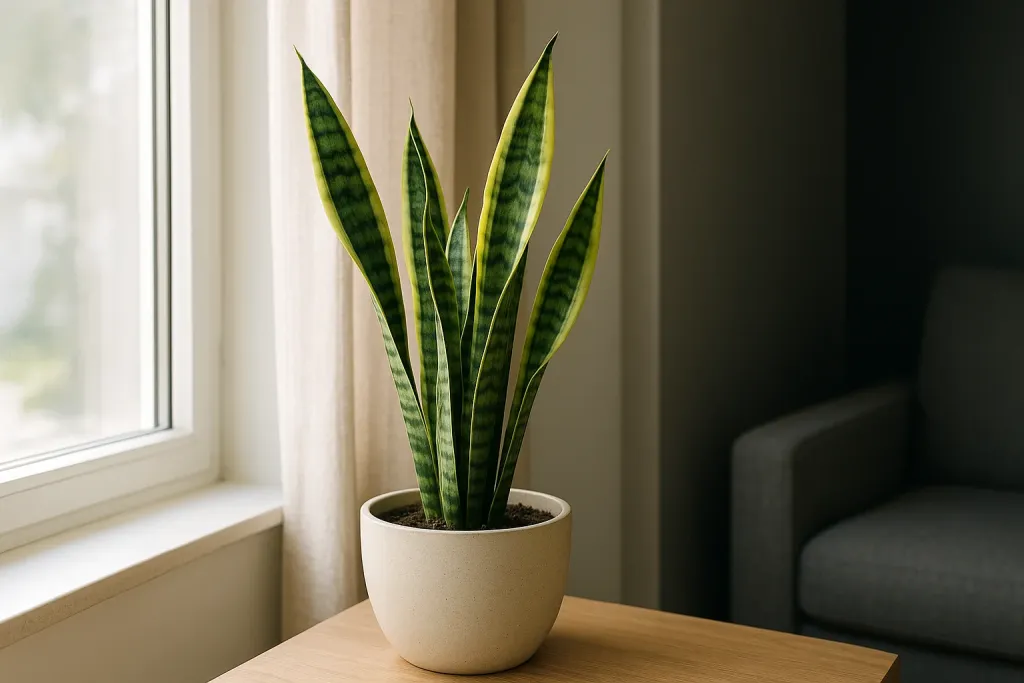
Snake plant (Dracaena trifasciata, formerly Sansevieria trifasciata) tolerates low light but still needs light to grow. NC State Extension describes its broad light tolerance and the importance of well-drained soil.
What you’ll learn in this article
- Understand the difference between snake plant light tolerance and light preferences
- Learn how to measure and interpret indoor light using PPFD and DLI
- Discover the optimal light level ranges for healthy snake plant growth
- Adjust lighting throughout the year based on seasonal changes
- Recognize warning signs of insufficient or excessive light exposure
- Explore supplemental lighting solutions for low-light environments
Affiliate disclosure: HomePlantBot may earn from qualifying purchases through the Amazon links below, at no extra cost to you.
Can you use a regular LED bulb for a snake plant?
Yes, a white LED can provide usable light if enough reaches the leaves. A distant ceiling bulb may be too weak even when the room looks bright. A grow light is easier to evaluate when the manufacturer supplies a PPFD map showing intensity at different distances. “Full spectrum,” wattage, or bulb color alone does not tell you the leaf-level intensity.
Grow-light distance and daily hours
Measure distance from the light to the nearest leaves, not to the soil. Follow the fixture’s guidance first. For a modest household grow bulb, 12–18 inches can be a trial position, not a universal setting: a panel may need much more clearance and a weak strip may need less. Avoid hot fixtures or contact with foliage.
Begin with 10–12 hours on a timer and keep a regular dark period. Account for daylight already reaching the plant. Measure at several leaves, then change distance or output gradually. Persistent bleaching or heat damage calls for less intensity; slow winter growth alone does not prove a light shortage.
Introduction to Light Requirements
The snake plant (Dracaena trifasciata, formerly Sansevieria trifasciata) is often hailed as one of the most low-maintenance houseplants available. With its stiff, upright leaves and sculptural form, it’s a favorite in homes and offices alike. Part of its appeal stems from its reputation for tolerating a wide range of lighting environments—even dim corners without natural light.
However, it’s important to distinguish between tolerance and thriving. While your snake plant may survive in low light, it won’t reach its fullest, healthiest potential without the right illumination. In this guide, we’ll uncover the real light tolerance realities of snake plants, from ideal intensity levels to seasonal adjustments.
For a full spectrum of care guidance, don’t miss our Snake Plant Care Playbook.
Understanding Light Intensity (PPFD and DLI)
What Are PPFD and DLI?
When it comes to indoor plant care, traditional advice like “bright indirect light” only tells part of the story. To fine-tune light conditions, growers turn to measurable data:
- PPFD (Photosynthetic Photon Flux Density): Measures the amount of usable light (in micromoles per square meter per second, or µmol/m²/s) hitting the plant each second.
- DLI (Daily Light Integral): Total light received by the plant daily, expressed in moles per square meter per day (mol/m²/day).
How to Measure Indoor Light Accurately
You don’t need a lab to measure light exposure. Use tools like:
- Smartphone apps: Apps like Photone or Lux Light Meter offer estimates based on your phone sensor.
- Dedicated light meters: A quantum/PAR meter measures PPFD. A lux meter measures human-weighted brightness and needs a spectrum-specific conversion; the two readings are not interchangeable.
Understanding these metrics helps ensure your snake plant isn’t simply surviving, but actively growing.
Useful light thresholds, without false precision
A practical starting trial for an established snake plant under a modest lamp is about 50–150 µmol/m²/s PPFD at the leaves. This uses general low-light-houseplant guidance, not a proven optimum for every snake-plant cultivar. Increase gradually if growth and the fixture warrant it.
| Measured PPFD | Calculated DLI | How to use it |
|---|---|---|
| 25 µmol/m²/s | 1.08 mol/m²/day | A low input; reassess if growth stretches or weakens. |
| 50 µmol/m²/s | 2.16 mol/m²/day | Lower end of the starting trial. |
| 100 µmol/m²/s | 4.32 mol/m²/day | A moderate trial level, adjusted to the plant. |
| 150 µmol/m²/s | 6.48 mol/m²/day | Upper end of that trial, not a target to force. |
DLI = PPFD × hours × 0.0036 for constant output. These are calculated examples, not measured window values or guaranteed growth thresholds. Window direction alone cannot predict DLI: season, glazing, obstructions, and distance matter. Lux cannot be converted to PPFD with one universal factor.
University of Minnesota Extension explains light intensity and places snake plants among low-light-tolerant houseplants. Check the actual fixture’s output at your chosen distance.
Amazon affiliate recommendations · As an Amazon Associate I earn from qualifying purchases. These are optional editorial picks, not hands-on tests. First try a position with more useful window light. Buy supplemental lighting when the leaves receive too little daylight, especially in a windowless room. A small lamp should suit the plant’s height and width, not just the shelf. Start simply: Use a consistent 10–12-hour schedule with a dark period. Follow the fixture’s distance instructions and adjust gradually. If your plant is already growing steadily near a window, you may not need a lamp.A grow-light option for a dim snake-plant spot
Adjusting Light with Seasons
Sunlight availability changes with the seasons, and your indoor lighting strategy should evolve accordingly. In fall and winter, the lower sun angle and shorter daylight hours reduce the light entering your home—even in south-facing windows.
Tips for Seasonal Adjustments
- Rotate your plant: Turn the pot every few weeks for even exposure.
- Use reflective aids: White walls, mirrors, or foil can bounce sunlight onto the plant.
- Move it closer to windows: Particularly in winter for maximum exposure.
- Mind dormancy: In low light seasons, your snake plant may go dormant. Reduce watering and avoid fertilizer during this period.
Signs of Insufficient or Excessive Light
Too Little Light
- Leggy or stretched growth
- Leaves become pale or dull
- Growth slows dramatically or stops
Too Much Light
- Leaf edges burn or turn brown
- Scorch marks on blade surfaces
- Wrinkled or curled leaves indicating sun stress
What to Do
If your snake plant isn’t thriving, reassess placement or start supplemental lighting. Moving it just a few feet from or toward a window can make a significant difference.
Supplemental Lighting Options
If your space doesn’t offer adequate light naturally, grow lights can bridge the gap. They’re especially useful during darker months or in windowless rooms.
Types of Grow Lights
- LED: Energy-efficient, cool-running, and available in full-spectrum varieties.
- CFL: Compact fluorescents are budget-friendly but produce more heat.
- T5 Fluorescent: Higher power output, good for multiple houseplants.
How to Use Grow Lights Effectively
- Distance: Use the fixture’s recommended distance. Treat 12–18 inches only as a trial for a modest bulb and measure at leaf level.
- Duration: Run lights 10–12 hours daily to mimic daylight cycles.
- Timing: Use smart plugs or timers for consistent schedules.
Recommended Setups
| Budget | Product Type | Example Use |
|---|---|---|
| $ | Clip-on LED grow light | Single plant on desk or shelf |
| $$ | Adjustable stand with full-spectrum bulb | Larger plants or plant groupings |
| $$$ | Smart LED panel with app control | Whole-room or dedicated grow area |
Conclusion
Snake plants are incredibly resilient, but their light tolerance doesn’t mean they can flourish just anywhere. When placed in environments that offer supportive light levels—with a measured, gradually adjusted lamp setup or useful daylight—they reward caretakers with vibrant color and new growth.
Use measurable data, reevaluate light sources with seasonal shifts, and embrace supplemental lighting where needed. Over time, you’ll better understand your specific space and how your snake plant responds to changes.
Pro tip: Keep a simple log to record light levels, changes in placement, and plant behavior. The patterns will help you refine your approach over time.
Ready to master snake plant care in every category? Visit the Snake Plant Care Playbook for a full strategy guide.
Need help choosing the next care step?
If the symptoms in this article match your plant, use Plant Bot or the rescue checklist before buying anything. A quick diagnosis helps you fix the actual cause, not just the most visible symptom.
Quick decision checklist
- Increase light gradually to avoid scorch.
- Rotate the plant for even growth.
- Water less in lower light.
- Watch color and leaf posture for feedback.
Next steps for your snake plant
Check the light, set a consistent timer, and let the pot dry appropriately between waterings. Read the soil and pot guide and browse the snake-plant care hub. If the leaves are soft rather than simply slow-growing, start with troubleshooting.
Can a snake plant live in a room without windows?
Yes, if artificial light supplies enough usable light at the leaves for a consistent daily period. An unlit room is not a sustainable growing location.
Should a snake-plant grow light stay on all night?
Use a timer with a regular dark period. Start with 10–12 hours of lighting daily and adjust intensity and duration to your fixture, daylight, and plant response.
Sources and further reading
Updated September 30, 2026. Care guidance describes starting points and observable clues; individual plants and growing conditions vary.