
HomePlantBot care guide
ZZ Plant Raven vs regular care differences
Both are ZZ plants with water-storing rhizomes: choose suitable light, drainage and observation-led watering.
Use the same core checks for Raven and green ZZ
Both are ZZ plants with water-storing rhizomes: choose suitable light, drainage and observation-led watering. Do not assign a lower water or fertilizer dose solely from darker leaf color. Compare actual pot, roots, mix and growth before changing care.
What you’ll learn in this article
- The visual and growth differences between Raven and regular ZZs
- How watering, light, and fertilization needs may differ
- Common issues unique to each variety
- Which one might be better suited to your space and lifestyle
Affiliate disclosure: HomePlantBot may earn from qualifying purchases through the Amazon links below, at no extra cost to you.
Introduction
ZZ plants are a must-have for plant lovers and new green thumbs alike. Known for their foliage and manageable care; a few pots are not an established air-cleaning system, they’re a staple in everything from minimalist living rooms to busy offices. But with the rise of the chic, dark-leaved Raven ZZ, many are asking: how does caring for this moody version differ from the classic green ZZ?
In this guide, we’ll walk you through the core differences between the classic ZZ plant and the Raven ZZ, breaking down everything from appearance and growth to watering habits and pest control. Whether you’re just starting your indoor plant journey or looking to expand your collection intelligently, this guide is crafted to meet your needs.
Overview: ZZ Plant vs ZZ Plant Raven
Appearance
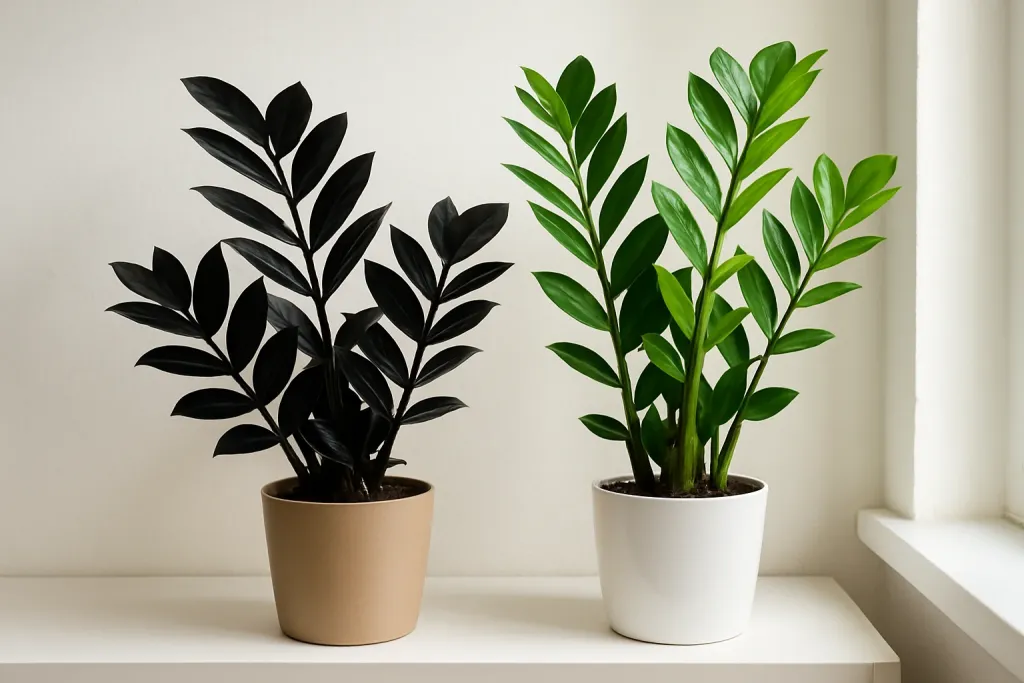
- Regular ZZ: Features glossy, medium to dark green leaves and upright stems that arch gently.
- Raven ZZ: Starts with bright green new growth that transitions to a rich, purple-black tone over time, giving it a dramatic edge.
Growth Habits
Both varieties share similar structural traits—thick, water-storing rhizomes and a slow-growing demeanor. However, a controlled comparative growth trial is not established here; do not infer metabolism from leaf color alone.
Popularity and Use
While the classic ZZ is universally loved for its timeless green foliage, the Raven ZZ is gaining traction among interior designers and plant enthusiasts seeking something bold and unique.
Comparison Table
| Feature | Regular ZZ | Raven ZZ |
|---|---|---|
| Leaf Color | Glossy green | Bright green turning to dark purple-black |
| Growth Rate | Moderate | Slower |
| Retail Rarity | Common | Less common |
| Price | Lower | Higher |
Care Requirements Compared
For a more foundational care guide applicable to both varieties, don’t miss our zz-plant-care-blueprint.
Light Requirements
- Regular ZZ: Adaptable to low, medium, or bright indirect light—but avoid direct sun.
- Raven ZZ: Also tolerant of low light but will show off its signature dark leaves better in medium to bright indirect lighting.
Watering
- Both varieties need infrequent watering. Let soil dry completely between sessions to prevent root rot.
- Pro tip: Compare actual drying in each pot; cultivar name alone does not establish a different watering interval.
Soil
ZZ plants thrive in well-draining soil. A cactus or succulent mix works well for both types. Avoid heavy potting soil that retains too much moisture.
Temperature & Humidity
- Ideal Range: 65–75°F (18–24°C)
- Humidity: Average indoor levels are sufficient for both.
Fertilization
- Regular ZZ: Fertilize once or twice per growing season (spring–summer) with a balanced, diluted fertilizer.
- Raven ZZ: Use actual growth, existing mix nutrition and the fertilizer label; darker leaves do not establish a one-feeding-per-year requirement.
Maintenance & Leaf Care
- Wipe leaves monthly with a soft cloth to clear dust and enhance photosynthesis.
- Raven ZZ leaves are more prone to showing dust and smudges, so gentle cleaning is essential.
- Occasional pruning of yellowed or damaged stalks helps both varieties look their best.
Helpful products for this care problem
Helpful products for this plant care problem
If this is the issue you are solving, these tools can make the next step easier. They are optional, but they match the care problem covered in this article.
 Soil moisture meterHelps check whether the root zone is actually ready for water.View on Amazon (paid link) ↗
 Digital hygrometerHelps track humidity and temperature around sensitive plants.View on Amazon (paid link) ↗Clip-on grow lightUseful for dim rooms, winter care, and plants stretching toward light.View on Amazon (paid link) ↗
As an Amazon Associate, HomePlantBot may earn from qualifying purchases.
Common Issues and Solutions
Pests and Disease
Although relatively pest-resistant, ZZ plants can host spider mites, mealybugs, or aphids—especially if neglected or kept too dry. Wipe leaves and inspect regularly. Neem oil or insecticidal soap can resolve minor infestations.
Yellowing Leaves
Overwatering is the usual suspect. Ensure the pot has drainage holes and that soil isn’t retaining excess moisture. Leaf yellowing on a Raven ZZ might be less obvious, so watch water levels closely.
Dormancy and Slow Growth
The Raven ZZ, in particular, can appear dormant, especially in colder months or low light. This doesn’t mean it’s dying—just adjust expectations and avoid overwatering during this time.
Drooping Stalks
- Too much or too little light can weaken stems.
- Overwatering may cause rot and lead to collapse at the base—check root health if stalks droop.
- Supportively prune to encourage fresh, upright growth if needed.
Propagation Differences
New Raven foliage normally emerges green and matures to purple-black, as described by its producer. Costa Farms identifies Raven as Zamioculcas zamiifolia ‘Dowon’ and sells it with propagation restrictions. Check the cultivar label and applicable permission before propagation; a general ZZ propagation method does not establish permission for a named cultivar.
Conclusion
While both the regular and Raven ZZ plants share fundamental care principles, subtle differences can help you better tailor your plant parenting approach.
- Raven ZZ: Dark mature foliage; use actual drying and growth to determine care rather than prescribing lower water and fertilizer from color.
- Regular ZZ: Faster growth, resilient in various environments, ideal for those seeking hardy greenery quickly.
So, which one’s for you? If décor is your top priority, the Raven ZZ’s unique color offers undeniable drama. But if you’re after a workhorse of a houseplant, regular ZZ delivers low-effort greenery with speed and strength.
For more in-depth care tips and practices, don’t miss our full zz-plant-care-blueprint.
FAQ: ZZ Raven vs Regular
Is the Raven ZZ more difficult to care for?
Not necessarily—neither type has a universal watering or feeding interval; inspect the actual pot and growing conditions. The main difference is its slower growth and need for consistent light to maintain its color.
Why is my Raven ZZ turning green?
This is likely new growth, which starts green and darkens gradually. If older foliage changes unexpectedly, inspect the actual leaf, light history, roots and pests; do not diagnose light-driven genetic reversion from color alone.
Can I mix Raven and regular ZZ plants in the same pot?
Yes! They have similar care needs and can coexist beautifully. Just make sure the container is large enough and offers excellent drainage.
Need help choosing the next care step?
If the symptoms in this article match your plant, use Plant Bot or the rescue checklist before buying anything. A quick diagnosis helps you fix the actual cause, not just the most visible symptom.
Quick decision checklist
- Check the growing conditions before changing everything.
- Adjust one care factor at a time.
- Use symptoms to guide the next step.
- Give the plant time to respond after corrections.
Sources for these care checks
- NC State Extension: Zamioculcas zamiifolia
- EPA: improving indoor air quality
- Costa Farms: Raven ZZ cultivar features and restrictions
These references support the corrected principles and evidence limits above; they do not establish trials or success rates for every cultivar, product or growing setup.