
HomePlantBot care guide
Snake Plant Variegated propagation
Chimeral yellow-edged snake plants such as ‘Laurentii’ can produce green plantlets from leaf cuttings.
Want to keep yellow leaf margins? Divide the plant
Chimeral yellow-edged snake plants such as ‘Laurentii’ can produce green plantlets from leaf cuttings. Increasing light or cutting off green leaves does not reliably rebuild that lost pattern. Iowa State recommends division to retain these leaf patterns. This is not a claim that every silver or patterned cultivar has the same type of variegation.
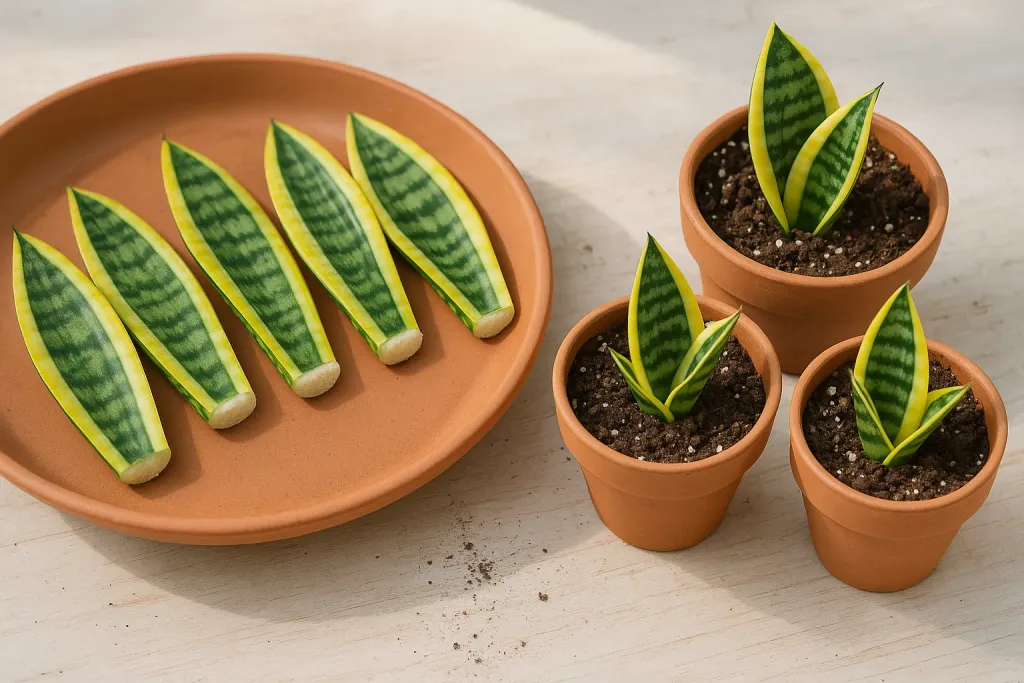
What you’ll learn in this article
- Understand how to propagate variegated snake plants successfully
- Identify ideal light, water, and soil conditions to preserve variegation
- Learn step-by-step propagation techniques for rhizome division and leaf cuttings
- Avoid common mistakes like reversion and rot
- Maintain healthy, vibrant variegated Sansevieria all year round
Affiliate disclosure: HomePlantBot may earn from qualifying purchases through the Amazon links below, at no extra cost to you.
Introduction and Variegation Overview
Welcome! This in-depth guide aims to demystify snake plant variegated propagation, helping both new and experienced plant lovers cultivate beautiful Sansevieria collections. Whether you’re aiming to multiply your favorite varieties or troubleshoot propagation issues, this article walks you through everything you need to know.
What is a Variegated Snake Plant?
Variegation refers to the presence of different colors on a plant’s leaves—commonly green, white, yellow, or even silver. In variegated snake plants, this occurs as streaks, borders, or blotches, making each leaf a work of art.
Popular variegated cultivars include:
- Sansevieria trifasciata ‘Laurentii’ – Yellow edges and green sword-shaped leaves
- Sansevieria trifasciata ‘Moonshine’ – Silvery-green foliage with soft texture
- Sansevieria trifasciata ‘Bantel’s Sensation’ – Narrow leaves with white vertical striping
Benefits & Challenges of Variegated Snake Plants
Variegated varieties add visual interest and brightness to indoor spaces. However, they can be more sensitive to environmental conditions than fully green varieties. Issues like reversion (losing variegation), root rot, and slow growth are more common and require specific care.
For broader care guidance, be sure to check out our full Snake Plant Care Playbook.
Light Requirements for Variegated Snake Plants
Unlike their all-green counterparts, variegated snake plants have less chlorophyll, which means they need more light to photosynthesize efficiently.
Optimal Light Conditions
- Place in bright, indirect sunlight, such as near an east or west-facing window.
- Avoid direct scorching rays, especially in summer.
- Rotate the plant every two weeks to encourage symmetrical growth and color balance.
Low-Light Impact on Variegation
Light can change growth and appearance, but it does not explain every change in pattern. Yellow-edged chimeral cultivars can lose the edge pattern when propagated from leaf pieces. Division preserves that pattern more reliably; see Iowa State's explanation.
Watering and Soil Needs
Variegated snake plants thrive on neglect—until propagation time. Their water and soil needs change slightly when multiplying them.
Watering Guidelines
| Plant Type | Recommended Watering |
|---|---|
| Mature Variegated Snake Plant | Check drying throughout the root zone; a dry surface alone is insufficient |
| Propagation Cuttings | Keep soil lightly moist but not soggy |
Soil Considerations
A well-aerated, fast-draining potting mix is crucial. Use a mix specially designed for cacti or succulents. Consider improving drainage with any of the following amendments:
- Perlite
- Pumice
- Coco coir
Temperature and Humidity
Snake plants, especially variegated ones, prefer a stable environment.
Ideal Temperature
Maintain an indoor temperature of 65°F to 85°F (18°C to 29°C). Avoid placing these plants near drafty windows or cold floors, especially in winter, as cold stress can damage the colorful portions of leaves first.
Humidity Tips
- Tolerant of dry air
- Thrives in moderate humidity—around 40–50%
- Group plants together or use a small humidifier to maintain moisture during propagation
Fertilizing and Nutrients
Snake plants don’t require heavy feeding, but nutrients become essential during growth and propagation seasons.
When and How to Fertilize
- Fertilize during spring and summer about once a month
- Use a balanced liquid houseplant fertilizer diluted to 50% strength
- Do not fertilize during winter dormancy
- Over-fertilization can burn roots and reduce the brightness of variegation
Helpful products for this care problem
Helpful products for better indoor light
If this is the issue you are solving, these tools can make the next step easier. They are optional, but they match the care problem covered in this article.
 Clip-on grow lightUseful for dim rooms, winter care, and plants stretching toward light.View on Amazon (paid link) ↗Digital hygrometerHelps track humidity and temperature around sensitive plants.View on Amazon (paid link) ↗
 Soil moisture meterHelps check whether the root zone is actually ready for water.View on Amazon (paid link) ↗
As an Amazon Associate, HomePlantBot may earn from qualifying purchases.
Propagation of Variegated Cultivars
There are two primary propagation methods, each with pros and cons regarding variegation retention.
1. Propagation by Rhizome Division (Best for Variegation)
Step-by-Step Guide
- Timing: Late spring is optimal for dividing rhizomes.
- Preparation: Clean tools and use an appropriate disinfectant according to its label; do not mix cleaning agents or apply an unspecified solution to living tissue.
- Choose a healthy plant with several leaf clusters and visible rhizomes.
- Remove the plant from its pot and gently separate sections of rhizome with at least one leaf each.
- Replant immediately in fresh, well-draining soil, water lightly, and maintain indirect sunlight.
2. Propagation by Leaf Cuttings
This method is simple but risks losing the unique color patterns.
Steps for Successful Leaf Cuttings
- Cut healthy leaf sections into 3- to 4-inch pieces
- Label the top of each cutting to ensure correct orientation
- Allow cuttings to callous for 24–48 hours
- Rooting options:
- Soil: Insert in damp succulent mix
- Water: Place upright in clean water, refreshing every few days
Root Development Timeline
- Roots appear in 4–6 weeks
- New pups form in 2–3 months under ideal conditions
Preventing Reversion
Identify the cultivar and propagation method. If a yellow-edged chimeral snake plant produces green offspring from a leaf cutting, brighter light and pruning do not reliably recreate the missing edge tissue. Use a rooted division from the patterned parent when retaining that pattern matters.
Pests and Common Problems
Common Pests
- Mealybugs: Look like white cotton patches
- Spider mites: Form webbing and cause leaf stippling
- Fungus gnats: Thrive in damp soil conditions
Prevention and Control Tips
- Wipe leaves with neem oil or insecticidal soap
- Improve air circulation around plants
- Allow topsoil to dry out between waterings to deter pests and prevent root rot
Solving Propagation Failures
If leaves turn mushy or rot during propagation, remove infected parts immediately. Let remaining cuttings dry and change to a dry medium if needed. Always use sterile tools and avoid overwatering.
Conclusion
Successfully propagating variegated snake plants involves thoughtful attention to their unique needs. Remember these key points:
- Use bright, indirect light to preserve variegation
- Select a draining soil mix and provide consistent care
- For best results, use rhizome division to retain vibrant patterns
- Monitor new growth and distinguish cultivar-specific propagation changes from environmental stress
With these practices, you’ll turn one beautiful plant into many. Ready to dive into everyday care tips? Explore our full Snake Plant Care Playbook to grow with confidence year-round.
Frequently Asked Questions
Can I propagate a variegated snake plant in water?
Yes, although root development may be slower. Be aware that variegation may not return on new growth from water-propagated leaf cuttings.
Why did my propagated plant lose its stripes?
For yellow-edged chimeral cultivars, green offspring can result from the leaf-cutting method. Increasing light or pruning does not reliably restore the lost edge pattern; choose division to retain it.
How long does propagation take?
Rooting typically begins in 4–6 weeks, while pups or new leaves may develop in 2–3 months. Conditions like warmth, light, and humidity can accelerate or delay growth.
Need help choosing the next care step?
If the symptoms in this article match your plant, use Plant Bot or the rescue checklist before buying anything. A quick diagnosis helps you fix the actual cause, not just the most visible symptom.
Quick decision checklist
- Increase light gradually to avoid scorch.
- Rotate the plant for even growth.
- Water less in lower light.
- Watch color and leaf posture for feedback.
Sources for these care checks
- NC State Extension: Dracaena trifasciata
- Iowa State Extension: leaf-section cuttings and snake-plant chimeras
- EPA: improving indoor air quality
These references support the corrected principles and evidence limits above; they do not establish trials or success rates for every cultivar, product or growing setup.