
HomePlantBot care guide
Snake Plant Variety guide
Known for their sleek, upright leaves and near-indestructible nature, snake plants have earned a spot as one of the most stylish and low-maintenance houseplants for homes and businesses alike. Also called Sansevieria or Dracaena trifasciata , these adaptable plants are excellent choices for cafés, salons, offices, or any space in need of a low-effort greenery upgrade.
What you’ll learn in this article
- A visual and practical guide to popular snake plant varieties
- How to select the right Sansevieria for your business or home
- Essential care guidelines to keep your snake plant healthy
- How to identify and fix common snake plant issues
- Simple propagation techniques for expanding your indoor garden
Affiliate disclosure: HomePlantBot may earn from qualifying purchases through the Amazon links below, at no extra cost to you.
Introduction
With numerous varieties to choose from—each offering distinct colors, leaf shapes, and growth habits—snake plants are more than just a plant; they’re a design element. Whether you’re filling a cozy corner in your waiting room or decorating countertops, choosing the right variety matters. In this guide, we’ll help you navigate the most popular types, basic care tips, common issues, and how to multiply your snake plant collection with easy propagation.
Need tips on everyday care? Check out our complete Snake Plant Care Playbook.
Overview: Types of Snake Plants
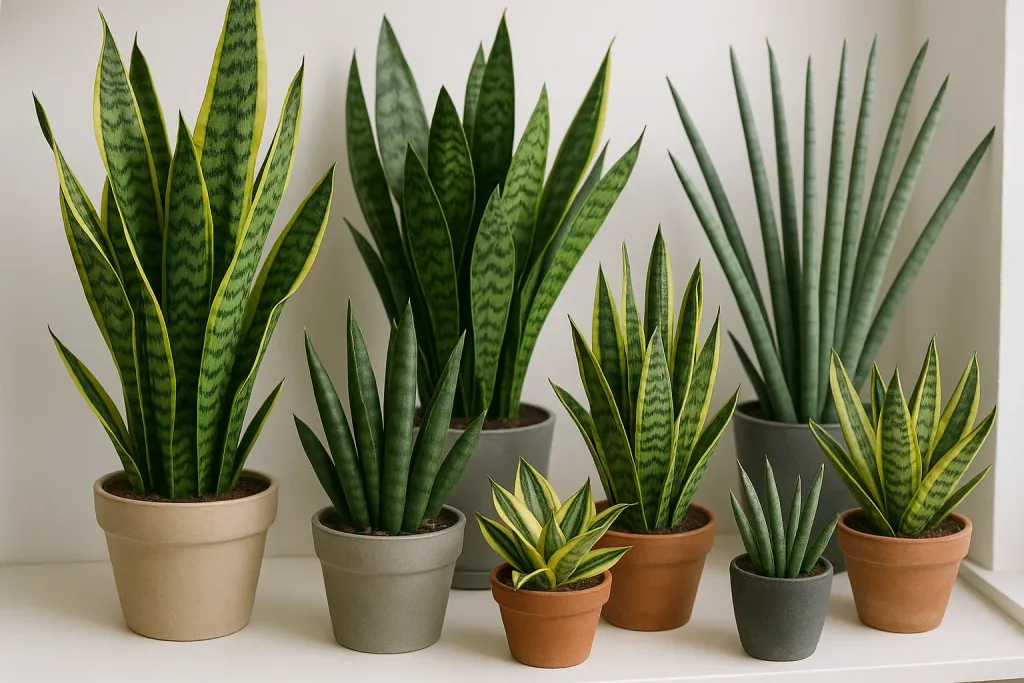
Here are the most popular snake plant varieties that combine beauty with resilience. Each type offers a unique visual appeal and fits different interior spaces and design aesthetics.
Sansevieria trifasciata ‘Laurentii’
- Signature bright yellow stripe along the leaf edges
- Tall, vertical growth habit — ideal for floor pots or corners
- Popular and instantly recognizable
Sansevieria trifasciata ‘Zeylanica’
- Deep green leaves with subtle silver wave-like patterns
- Low-key version of ‘Laurentii’—perfect for minimalists
- Blends well into monochrome or industrial décor
Sansevieria cylindrica
- Rod-shaped, tubular leaves — striking and architectural
- Can grow outward or be braided for visual interest
- Great in modernistic or open-plan spaces
Sansevieria ‘Moonshine’
- Pale, silvery-green matte leaves — calming and elegant
- Soft color pairs well with light woods and Scandinavian styles
- Brightens up darker nooks or neutral spaces
Sansevieria ‘Boncel’ (Dwarf Variety)
- Compact, starburst leaf format
- Perfect for desktop displays and limited shelf space
- Excellent for cafés, reception counters or window sills
Sansevieria masoniana (Whale Fin)
- Massive, paddle-shaped single leaves
- One of the most visually dramatic snake plants
- Better suited for floor placement or lobby use
Sansevieria ‘Black Coral’
- Glossy, nearly black leaves with subtle green striping
- Great for modern, monochrome, or luxury office aesthetics
- Sunlight brings out its depth and elegance
Quick Comparison Table
| Variety | Height | Leaf Shape | Light Needs | Best Placement |
|---|---|---|---|---|
| Laurentii | 2–4 ft | Flat, tall leaves | Bright indirect | Floor corners |
| Zeylanica | 2–3 ft | Flat, sword-like | Low to medium | Against walls |
| Cylindrica | Up to 2 ft | Tubular & upright | Bright indirect | Accent piece |
| Moonshine | 1.5–2.5 ft | Flat and broad | Medium to bright | Minimalist interiors |
| Boncel | 6–12 in | Tubular rosette | Low to moderate | Desktops or shelves |
| Whale Fin | 2–3 ft | Wide paddle | Bright indirect | Floor display |
| Black Coral | 2–3 ft | Flat, sword-like | Medium to high | Modern spaces |
Care Requirements
Snake plants are famously forgiving, but a little attention goes a long way. For detailed instructions, visit our complete Snake Plant Care Playbook.
Light
- Thrives in bright, indirect light but will tolerate low-light zones
- Too much direct sun = leaf bleaching, especially on patterned types
Water
- Water every 2–3 weeks
- Allow soil to dry completely between waterings
- Use pots with drainage holes to prevent root rot
Soil
- Use well-draining soil — cactus or succulent potting mix is ideal
- Terracotta pots help prevent overwatering
Temperature & Humidity
- Best in temperatures between 60–85°F
- No special humidity needs — ideal for offices
Fertilizer
- Light feeding in spring/summer using cactus fertilizer
Cleaning & Maintenance
- Wipe leaves occasionally to remove dust
- Remove brown or damaged leaves using sanitized garden shears
Helpful products for this care problem
Helpful products for this plant care problem
If this is the issue you are solving, these tools can make the next step easier. They are optional, but they match the care problem covered in this article.
 Soil moisture meterHelps check whether the root zone is actually ready for water.View on Amazon (paid link) ↗
 Digital hygrometerHelps track humidity and temperature around sensitive plants.View on Amazon (paid link) ↗Clip-on grow lightUseful for dim rooms, winter care, and plants stretching toward light.View on Amazon (paid link) ↗
As an Amazon Associate, HomePlantBot may earn from qualifying purchases.
Common Issues and How to Fix Them
- Yellowing leaves: Often a sign of overwatering
- Mushy base or collapsed leaves: Root rot — remove affected parts and repot
- Wrinkled or droopy leaves: Under-watered or exposed to cold drafts
- Brown tips: Could be low humidity or salt buildup — flush soil or trim
- Mealybugs or spider mites: Wipe with neem oil or spray with insecticidal soap
For expanded troubleshooting, see the Snake Plant Care Playbook.
Propagation Tips
Expanding your collection—or creating small employee gifts—is easy with snake plant propagation.
Leaf Cuttings (Water or Soil Method)
- Cut a healthy leaf into 2–3 inch segments
- Let cuttings dry and callous for 1–2 days
- Place in water (change weekly) or succulent soil
- Roots form within 4–8 weeks
Division Method
- Remove plant from pot and gently separate root clumps
- Replant each section in its own pot
- Water lightly and place in indirect light
Business tip: Propagated snake plants are eco-friendly gifts that make thoughtful client thank-yous or seasonal office giveaways.
Conclusion
From bold and sculptural to soft and subtle, there’s a snake plant variety for every workplace and taste. With easy care requirements and strong visual impact, they’re the ultimate set-it-and-forget-it plant for busy environments.
Whether you want to bring elegant greenery to your front desk or create a tranquil break room, you now have the tools to choose and care for the perfect Sansevieria. Explore, experiment, and most importantly—enjoy your plants.
Want an in-depth care routine? Get all the details in our Snake Plant Care Playbook.
Need help choosing the next care step?
If the symptoms in this article match your plant, use Plant Bot or the rescue checklist before buying anything. A quick diagnosis helps you fix the actual cause, not just the most visible symptom.
Quick decision checklist
- Check the growing conditions before changing everything.
- Adjust one care factor at a time.
- Use symptoms to guide the next step.
- Give the plant time to respond after corrections.