Introduction
If you’ve ever wondered why your snake plant’s leaves go soft, yellow, or mushy in winter, the culprit is usually cold damage or improper overwintering. Whether your plant lives indoors or spends summer on the patio, winter introduces new risks.
This complete guide will show you everything you need to know about snake plant overwintering & cold damage. From temperature requirements and symptoms of stress to preventive care and propagation fixes, you’ll be prepared for any cold-season challenges.
For more on year-round snake plant maintenance, see our Snake Plant Care Playbook.
Snake Plants & Temperature Sensitivity
Meet the Sansevieria
Snake plants, also known as Sansevieria or Dracaena trifasciata, are native to the warm, dry regions of West Africa. With their upright, sword-like leaves and easygoing nature, they’re popular houseplants around the world.
Temperature Sweet Spot
Sansevierias thrive best between 60°F and 85°F (15°C to 29°C). This range mimics their native climate and ensures strong growth and healthy leaves. Once the temperature drops below 50°F (10°C), growth slows. Dipping below 40°F (4°C) can cause tissue damage or root rot.
Why Snake Plants Can’t Handle the Cold
The plant’s succulent leaves store moisture, which makes them prone to internal freezing when exposed to very cold temps. Below-freezing weather can rupture cell walls, meaning permanent injury or plant death.
Overwintering vs. Regular Care
Overwintering specifically refers to the adjustments and protective steps you take during the colder months to help a plant survive until growing conditions improve in spring. While basic care focuses on light and water balance, overwintering integrates temperature, placement, and timing strategies designed for colder conditions.
Care Requirements to Overwinter Snake Plants Successfully
Indoor Placement
- Ideal spots: Place your snake plant near a south- or east-facing window where it can get bright, indirect light.
- Avoid: Cold drafts near exterior doors or windows, and heating vents that cause dry air fluctuations.
Light
Snake plants still need sunlight in winter, even though they go semi-dormant. Naturally reduced daylight can make indoor lighting insufficient.
- Strategy: Keep them in the brightest room possible.
- Grow lights: Use LED grow lights to supplement natural light, especially in northern climates or window-poor homes.
Winter Watering Rules
| Condition |
Watering Frequency |
| Warm indoor room & bright light |
Once every 3–4 weeks |
| Cooler room with low light |
Every 5–6 weeks |
Tip: Let the soil dry out completely before watering. Overwatering in winter is a fast path to root rot.
Temperature Control
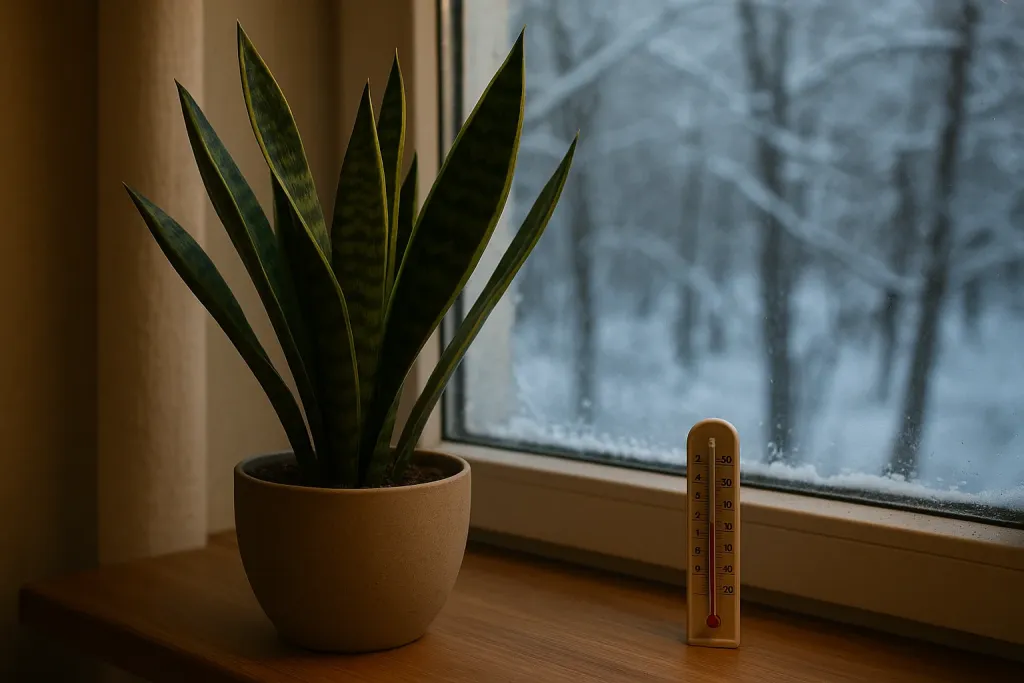
- Keep room temperatures between 60°F and 75°F.
- Use portable space heaters or thermostats in rooms prone to nighttime drops.
- Place a small thermometer near the plant if you’re unsure about conditions.
Soil and Container Setup
Heavy, moisture-retaining soil is the enemy during cold months.
- Use: A well-draining cactus or succulent mix. Add extra perlite or coarse sand if needed.
- Drainage: Ensure pots have drainage holes to prevent standing water or freezing moisture.
Common Cold-Weather Issues & How to Spot Cold Damage
Visual Symptoms of Cold-Damaged Snake Plants
- Drooping leaves: A typically stiff leaf may start to lean or collapse at the base.
- Yellow or black tips: Early signs of tissue death from cold exposure.
- Soft, transparent sections: Usually indicates frost damage or internal leaf cell rupture.
Below-the-Soil Concerns
Cold stress affects not just the leaves but also the roots and rhizomes.
- Rot signs: Mushy roots, foul smell, brown discoloration beneath the soil surface.
- Check regularly by gently removing the plant from its pot if you notice signs of above-ground distress.
- Cut away mushy or translucent areas with clean pruning shears.
- Move the plant to a warm, dry area with indirect light.
- Pause watering for 2–3 weeks to allow internal tissues to recover.
- If roots are badly damaged, repot with dry, fresh soil after trimming rotted roots.
How to Prevent Cold Damage
- Bring outdoor snake plants indoors before night temps fall below 50°F.
- Wrap garden pots with plant blankets, bubble wrap, or burlap for insulation.
- Place pots on elevated surfaces like plant stands to minimize direct contact with freezing ground.
- Avoid watering within 24–48 hours before a frost or cold front.
Propagation: Salvaging & Growing from Cold-Damaged Leaves
When Propagation Is Possible
If the leaf is only partially damaged and still firm in sections, it may be saved and used for propagation.
How to Prepare a Leaf for Propagation
- Sanitize your knife: Use rubbing alcohol or boiling water.
- Cut the damaged section away, leaving a firm, green piece at least 4–5 inches long.
- Let the cuttings air-dry for 24–48 hours until the end forms a callus.
2 Simple Methods: Water vs. Soil
| Method |
Instructions |
| Water Propagation |
Place the base of the cutting in a jar of clean water. Change water weekly. Roots should appear in 4–6 weeks. |
| Soil Propagation |
Plant the cutting base-down in moist succulent soil. Keep warm and bright. Mist lightly once a week. |
Expectations & Benefits
- Growth is slower in winter—don’t expect visible roots for several weeks.
- In spring, rooted cuttings will take off as light and temperatures increase.
- Each successful cutting adds to your snake plant collection—turning winter damage into opportunity.
Conclusion
Winter can be a tricky time for snake plants, but with the right knowledge and a few simple tweaks, your Sansevieria can survive beautifully (and even multiply!).
Remember, preparation is key—don’t wait until frost hits. Monitor indoor temperatures, adjust your watering habits, and find your plant the brightest spot in the house during the short days of winter.
And most importantly: be patient. Your snake plant may not grow much until spring, but with careful overwintering, it will be ready to thrive when the weather warms up.
Got your snake plant through winter intact? See what’s next in the Snake Plant Care Playbook.
Cold snake plant damage is usually a water-and-temperature combo
Snake plants tolerate neglect, but they do not tolerate cold wet roots well. In winter, the safest move is usually brighter placement, less water, and patience. If leaves turn mushy or translucent, focus on stopping spread and saving firm sections.
Quick decision checklist
- Keep snake plants away from drafty windows, cold doors, garages, and unheated sunrooms.
- Water only when the mix is dry deep in the pot, not just dry on top.
- Do not fertilize a chilled or damaged snake plant. Wait for stable warmth and active growth.
- Cut away mushy tissue with clean tools. Firm leaf sections can often be propagated, but soft sections should be discarded.

 Atildp Grow Lights for Indoor Plants Full Spectrum, 6500K Clip Plant Growing Lamp
View on Amazon (paid link) ↗
Atildp Grow Lights for Indoor Plants Full Spectrum, 6500K Clip Plant Growing Lamp
View on Amazon (paid link) ↗
 JESLED Waterproof Grow Lights for Indoor Plants, 2FT Sunlight Full Spectrum
View on Amazon (paid link) ↗
JESLED Waterproof Grow Lights for Indoor Plants, 2FT Sunlight Full Spectrum
View on Amazon (paid link) ↗
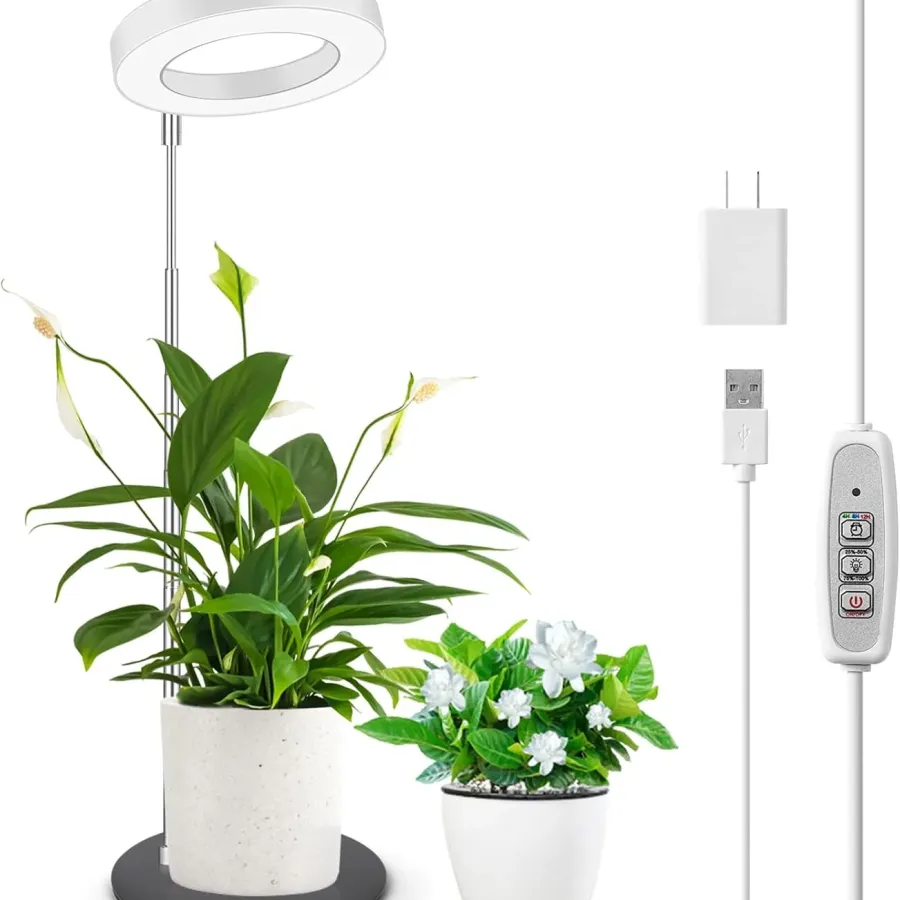 LORDEM Grow Light for Indoor Plants, 48 LEDs
View on Amazon (paid link) ↗
LORDEM Grow Light for Indoor Plants, 48 LEDs
View on Amazon (paid link) ↗
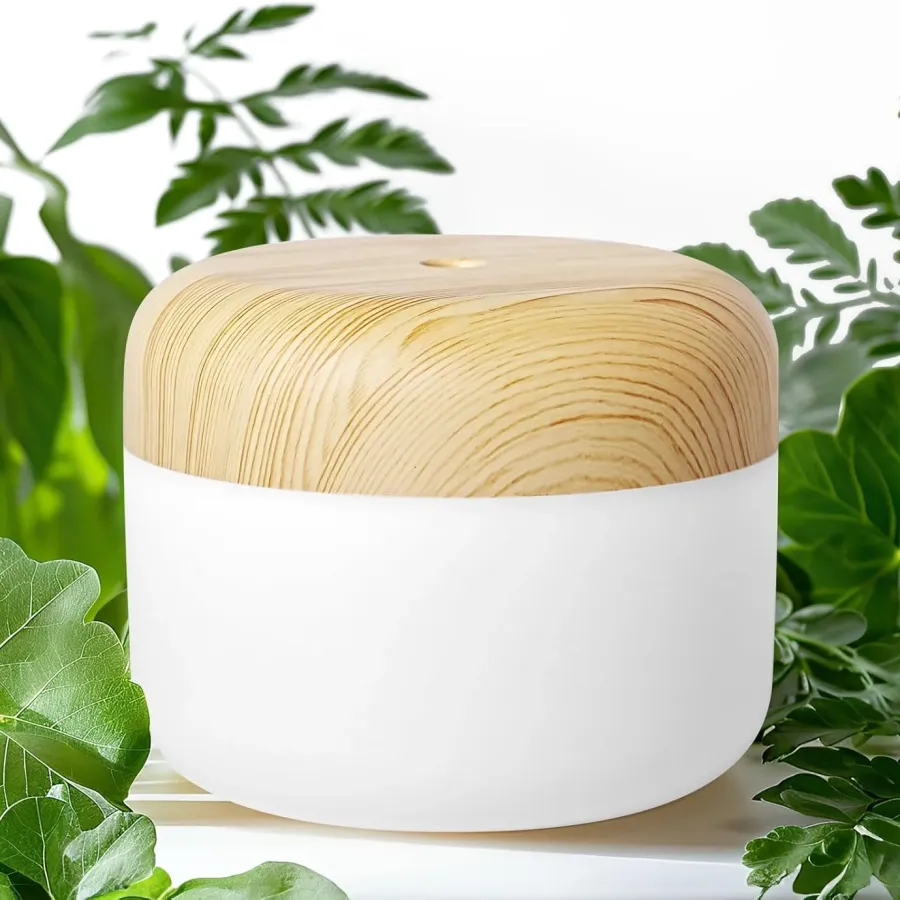 400ML Mini Desk Personal Humidifier, Portable Cool Mist
View on Amazon (paid link) ↗
400ML Mini Desk Personal Humidifier, Portable Cool Mist
View on Amazon (paid link) ↗
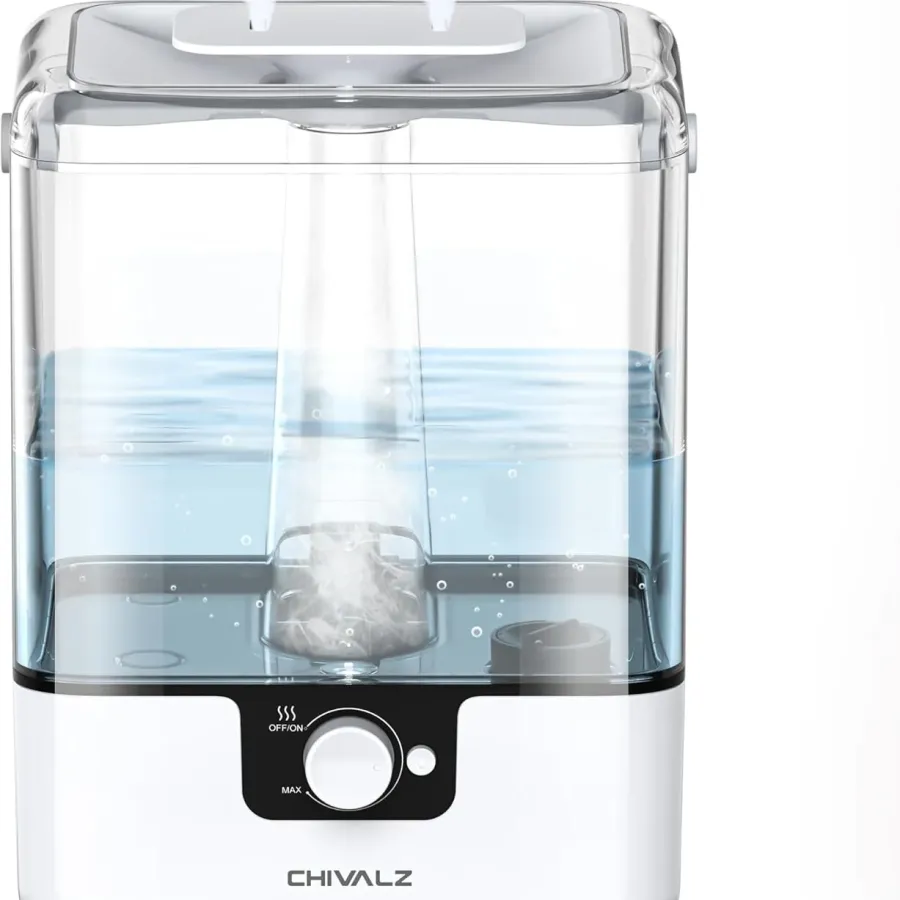 CHIVALZ Humidifiers for Bedroom, 6L Cool Mist
View on Amazon (paid link) ↗
CHIVALZ Humidifiers for Bedroom, 6L Cool Mist
View on Amazon (paid link) ↗