
HomePlantBot care guide
Temperature And Climate Needs for Indoor Plants
A room thermostat may miss a cold window or hot vent at leaf height.
Measure the plant location, then use species-specific limits
A room thermostat may miss a cold window or hot vent at leaf height. Record daytime and nighttime conditions at the plant, compare the identified species with reliable guidance and move it away from brief extremes. General comfort ranges are starting context, not universal survival thresholds.
Affiliate disclosure: HomePlantBot may earn from qualifying purchases through the Amazon links below, at no extra cost to you.
Indoor houseplants flourish most when their temperature and environment mimic their native habitat. Too cold or too hot — or changes that are too sudden — can stress your plants, stunting growth, browning leaves, or even causing die‑back. Here’s how to create the ideal climate for your indoor greenery.

Why Temperature Matters
Plants use temperature as a signal for when to grow, rest, or thrive. Consistent, ideal temperatures support photosynthesis, nutrient absorption, and flowering. Rapid shifts — like drafty windows or heat vents — can shock them. Getting the climate right helps plants grow strong, safe, and vibrant.
Ideal Temperature Ranges
Think of temperature as your plant’s body clock. When it’s consistent and comfortable — daytime warmth, slight cool at night — plants stay energized and bloom beautifully.
Tropical foliage plants: Day 70–80 °F / Night 60–68 °F
Flowering indoor plants: Similar days, but cooler nights 55–60 °F
Succulents & cacti: Prefer the warmer end — 70–80 °F day, don’t dip below ~60 °F night
Cool‑loving plants (e.g. cyclamen, aralia): Day 60–70 °F / Night 50–55 °F
Signs of Temperature Stress
Plants talk in their leaves — here’s what to watch for if the air isn’t quite right:
Cold stress: Leaf curl, yellowing, wilting, or translucent leaves
Heat stress: Drooping leaves, crisp edges, slowed growth, leaf drop, or stunted flowering
Sudden changes: Leaf drop or spindly growth often follow rapid drafts or heating shifts
Protecting Your Plants: Best Practices
Treat your plant space like a mini‑greenhouse: stable warmth, gentle airflow, and no extremes.
Maintain stable temps (avoid < 50 °F or > 85 °F)
Keep plants off drafty windowsills and vents
Let nights be ~10–15 °F cooler than days
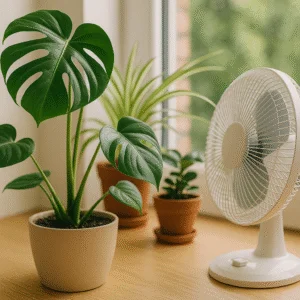
Use fans or open windows for gentle circulation (avoid cold drafts)
During heatwaves: check root-zone moisture before adding water; protect from excessive heat and light, and avoid creating damp indoor conditions
In winter: avoid cold drafts, keep plants away from frost‑prone glass walls
Helpful products for this care problem
Optional humidity and watering tools
No supply is required to use this guide. Check your growing conditions and the product instructions before buying.
 Room humidifierMeasure room humidity before considering a humidifier; leaf damage can have several causes.View on Amazon (paid link) ↗Digital hygrometerHelps track humidity and temperature around sensitive plants.View on Amazon (paid link) ↗Long-spout watering canMakes careful watering easier around dense foliage.View on Amazon (paid link) ↗
As an Amazon Associate, HomePlantBot may earn from qualifying purchases.
Quick Reference Chart
This chart helps you see which plants fit which temp zones — making placement easier.
| Plant Type | Day Temp (°F) | Night Temp (°F) | Draft/Vent Placement |
|---|---|---|---|
| Tropical foliage | 70–80 | 60–68 | Avoid vents/windows drafts |
| Flowering indoor | 70–80 | 55–60 | Use consistent room zones |
| Succulents & cacti | 70–80 | 60+ | Sunny, dry corners work best |
| Cool‑loving species | 60–70 | 50–55 | Tolerate slight chill |
Frequently Asked Questions (FAQs)
Q: Can plants handle temperature swings like nights reaching 50 °F?
A: Most tropicals don’t like dipping below 55–60 °F. Cool-tolerant types can safely drop into the low‑50s.
Q: How fast is too fast for temperature change?
A: There is no single verified ten-degree threshold for every houseplant. Consider species, exposure duration and current acclimation.
Q: Can I use a thermostat/humidifier combo?
A: Check actual device features and the plant location; a plant-mode label does not establish effective temperature or humidity control.
Citations
The corrected temperature and humidity principles are supported by University of Maryland Extension, linked in the source notes below. The former concatenated search-result labels are not usable citations and have been removed.
Need help choosing the next care step?
If the symptoms in this article match your plant, use Plant Bot or the rescue checklist before buying anything. A quick diagnosis helps you fix the actual cause, not just the most visible symptom.
Quick decision checklist
- Track humidity before guessing.
- Keep soil evenly moist, not swampy.
- Avoid cold drafts and hot dry vents.
- Increase humidity gradually around sensitive foliage.
Sources for these care checks
These references support the corrected principles and evidence limits above; they do not establish trials or success rates for every cultivar, product or growing setup.