
HomePlantBot care guide
Humidifier for Ferns: Humidity Levels, Placement & Best Options
Learn the best humidity level for indoor ferns, where to place a humidifier, how long to run it, and how to prevent brown, crispy fronds.
Does your fern need a humidifier?
Use a hygrometer and check the roots before buying a humidifier. Dry air can contribute to crispy fronds, but dry soil, mineral buildup, and strong sun can look similar. Fern species differ in how much humidity they tolerate.
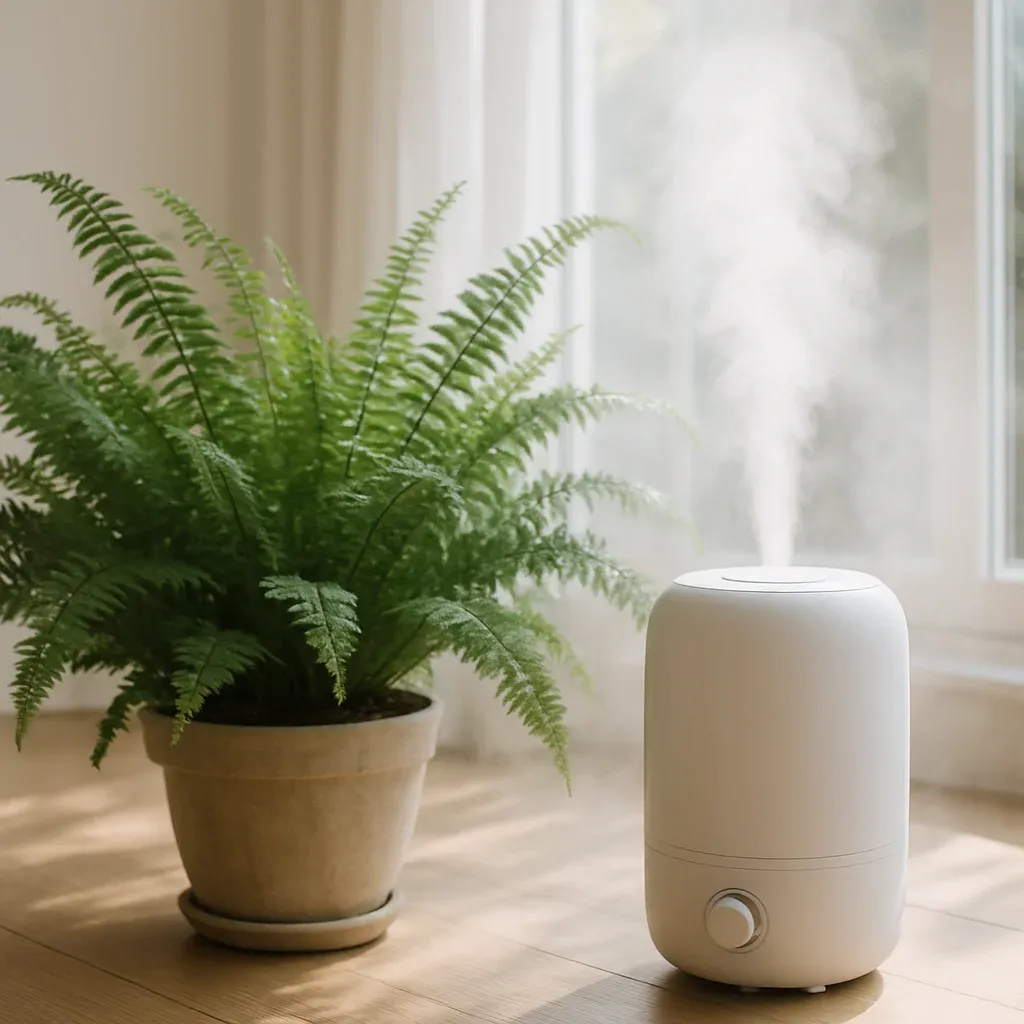
For a shared living space, try roughly 40–50% relative humidity if your home can support it without condensation. The EPA recommends not humidifying rooms above 50%. A humidity-sensitive fern may do better in a suitable ventilated enclosure than in an overly damp room.
- Place the sensor near the plant, outside the direct mist stream.
- Aim mist away from leaves, furniture, and walls; follow the device’s clearance instructions.
- Use a humidistat or short cycles rather than a fixed all-day schedule.
- Reduce output if surfaces become damp, and clean the unit as directed.
For crispy leaves, also check our fern troubleshooting guide. Humidity cannot repair roots damaged by soggy soil.
What you’ll learn in this article
- Understand how temperature and humidity impact indoor fern health
- Learn the optimal climate conditions for various common fern species
- Discover how to adapt your fern care routine across seasons
- Explore practical tools and methods for increasing indoor humidity
- Identify signs of plant stress due to improper environmental conditions
Affiliate disclosure: HomePlantBot may earn from qualifying purchases through the Amazon links below, at no extra cost to you.
Introduction to Temperature and Humidity Needs for Indoor Ferns
Ferns are a beloved choice among indoor plant enthusiasts thanks to their graceful fronds and lush green appeal. However, to keep these delicate plants thriving, it’s essential to recreate a microclimate that closely mimics their natural habitat.
Ferns originate from forest floors, where humidity is high and temperatures are stable. They flourish in shady, moist environments with consistent warmth and moisture. Understanding and replicating these conditions indoors is the key to keeping your ferns green and growing.
Optimal Temperature Ranges for Popular Indoor Ferns
Most indoor ferns are comfortable within a temperature range of 60°F to 75°F (15°C to 24°C). This range provides the right balance of warmth without stressing the plant. However, different species can vary slightly in preference.
| Fern Type | Preferred Temperature Range |
|---|---|
| Boston Fern (Nephrolepis exaltata) | 60°F to 75°F |
| Maidenhair Fern (Adiantum spp.) | 65°F to 80°F |
| Staghorn Fern (Platycerium spp.) | 60°F to 80°F |
Be mindful of cold drafts from windows or sudden temperature spikes due to nearby heating vents or direct sunlight. Such fluctuations can stress your ferns, leading to yellowing fronds or dropped leaves. For detailed care by fern type, visit our guide on Indoor Ferns: Care for Common Ferns.
Managing Seasonal Changes
Indoor environments shift significantly with the seasons, and so should your plant care strategy.
Winter Care Adjustments
- Furnaces and indoor heating dry out air, significantly lowering humidity levels.
- Relocate ferns away from radiators or heat vents to prevent dry-out.
- Consider placing ferns near a bathroom or laundry area where humidity is naturally higher.
- Use grow lights if natural light is insufficient, especially for north-facing windows.
Summer Care Adjustments
- Watch out for cold drafts from air conditioning vents or fans.
- Avoid direct sunlight from longer summer days that may cause fronds to burn.
- Measure humidity if the air seems dry; repeated misting does not maintain room humidity.
Continuously monitor indoor climate using simple digital thermometers and hygrometers to make proactive adjustments.
Amazon affiliate recommendations · As an Amazon Associate I earn from qualifying purchases. These are optional editorial picks, not hands-on tests.
Choose a humidity tool only after checking the cause
If the mix is dry, correct watering first. If room humidity is already around 40–50%, a humidifier is unlikely to be the missing step. For persistently dry air, measure first and add moisture only as needed.
 Measure first: Govee digital hygrometerUse it when you do not know whether the air near the fern is dry. Track readings near the fronds over several days.Skip another sensor if you already have a reliable one. Keep it out of direct mist and check the model’s app requirements.View on Amazon (paid link) ↗For confirmed dry air: LEVOIT top-fill humidifierConsider a room humidifier when low humidity persists after moving the fern away from hot, drying airflow.Check room coverage and cleaning access. Use a separate humidity reading, keep mist off leaves, and stop before condensation or room humidity above 50%.View on Amazon (paid link) ↗
No purchase needed? Move the plant away from vents, keep its mix appropriately moist, and reassess new fronds. Old crispy edges will not turn green again.
Maintaining Adequate Humidity
Humidity is just as vital as temperature. Many tropical ferns favor humid conditions, but species and household conditions differ. Start near 40–50% in a living space without condensation; higher plant-only humidity requires a suitable enclosure and careful moisture management. Most modern homes, particularly in colder months, hover well below 40%, causing issues like crispy fronds and browning tips.
By understanding how your home’s air compares to ideal fern conditions, you can take steps to modify it. Here’s a quick snapshot of what ferns prefer versus what homes provide:
| Environment | Typical Relative Humidity |
|---|---|
| Fern care in a shared room | Species-dependent; 40–50% starting trial in living spaces |
| Average Heated Home (Winter) | 25%–40% |
| Average Air-Conditioned Home (Summer) | 35%–50% |
Tools and Methods to Improve Indoor Humidity
Fortunately, there are several low-effort tools and techniques to enhance humidity around your indoor ferns.
Humidity or Pebble Trays
- Fill a shallow tray with pebbles and water.
- Place plant pots on top, ensuring the pot base stays above the water line (not submerged).
- Evaporation may have a small, localized effect; a tray is not a reliable way to control room humidity. Check the hygrometer.
Room Humidifiers
- Cool-mist humidifiers avoid hot steam, but ultrasonic models can disperse minerals from tap water. Use the water type specified by the manufacturer; distilled water limits mineral dust.
- Warm-mist humidifiers also work but may raise room temperature.
- Choose a portable unit you can place near a grouping of plants or keep in a designated plant-care room.
Misting
Misting briefly wets leaves and does not provide lasting humidity control. Keep foliage from staying wet, especially where airflow is limited.
Group Plants Together
Placing several moisture-loving plants close to each other may modestly raise local humidity through transpiration—the release of moisture from plant leaves.
High-Humidity Rooms
Bathrooms (with a window for light), kitchens, or laundry spaces often have higher moisture in the air. These spaces can serve as natural humid studios for your moisture-craving ferns.
Signs of Stress from Poor Temperature or Humidity
Watch for the following indicators that your fern is struggling:
- Yellowing fronds: Often caused by dry air or inconsistent watering.
- Crispy or browning edges: Can reflect dry air, dry roots, mineral buildup, or too much sun; not a diagnosis by itself.
- Leaf drop: Usually a result of temperature stress, including cold drafts or hot blows.
- Stunted growth: Can be linked to both low temperatures and lack of moisture.
- Moldy soil or fuzzy stems: Indicates overwatering or excessive ambient moisture—signs of overcorrecting with too much humidity or poor air circulation.
If your fern displays these symptoms, gradually adjust its environment. Avoid rapid shifts, which can further stress the plant. Always address one factor at a time: increase humidity or relocate the plant, then observe its response before making another change.
Humidity Upgrade Ladder
If your fern is still struggling, increase humidity in stages instead of jumping straight to the most complicated setup.
- Start easy: Move the fern away from vents and drier traffic areas.
- Next step: Group moisture-loving plants together to create a small microclimate.
- More support: Use a pebble tray or place the fern in a naturally more humid room.
- Reliable solution: Add a humidifier during the driest months or in rooms with HVAC running often.
- Best long-term approach: Combine stable humidity with consistent light, airflow, and careful watering.
Conclusion
Creating the right indoor habitat for your ferns hinges on managing temperature and humidity. These tropical plants aren’t complicated, but they flourish best when their surroundings echo those of a shaded, moist forest floor. With thoughtful monitoring and some practical tools, you can keep your ferns vibrant year-round.
Start by choosing one humidity-enhancing method—such as a pebble tray or grouping plants—and track your fern’s response. Simple steps can lead to lasting greenery.
For more fern care tips, explore our Indoor Ferns: Care for Common Ferns guide.
Quick Humidity Boost Tips
- Use a pebble tray under your fern’s pot
- Group ferns together to increase moisture
- Run a humidifier near plant displays
- Relocate plants to a bathroom with indirect light
Track your fern’s care
Record humidity, soil moisture, and new frond growth in your own notes. Use our free rescue checklist to organize the checks.
Need help choosing the next care step?
If the symptoms in this article match your plant, use Plant Bot or the rescue checklist before buying anything. A quick diagnosis helps you fix the actual cause, not just the most visible symptom.
Quick decision checklist
- Track humidity before guessing.
- Keep soil evenly moist, not swampy.
- Avoid cold drafts and hot dry vents.
- Increase humidity gradually around sensitive foliage.
Sources and further reading
Updated September 30, 2026. Care guidance describes starting points and observable clues; individual plants and growing conditions vary.